For OEM brands, distributors, and wholesale buyers, understanding the automatic movement structure is not merely a technical exercise. Rather, it directly influences product positioning, cost control, long-term reliability, and end-customer satisfaction.
In practice, the automatic movement is one of the most decisive components affecting wearing comfort, perceived quality, power reserve consistency, after-sales service frequency, and overall brand credibility—especially in the mid-to-high mechanical watch segments.
Accordingly, authoritative industry references such as ETA technical documentation and Sellita movement manuals consistently emphasize that rotor design and winding efficiency are among the primary determinants of automatic movement performance and durability.
Core Structure of an Automatic Movement: A Buyer-Oriented View
From an OEM buyer’s perspective, an automatic movement should not be seen as isolated parts. Instead, it is best understood as three interdependent functional systems that work together to ensure stable energy generation and delivery.
Rotor Assembly: The Energy Collection System
At the heart of every automatic movement lies the rotor—the oscillating mass that converts wrist motion into mechanical energy. Therefore, its design, material selection, and balance directly affect winding efficiency and daily usability.
Key evaluation points for buyers include rotor material (tungsten alloy, brass, or steel), mass distribution (central vs. peripheral weighting), and bearing type (jeweled bearing or ball-bearing system).
Notably, high-efficiency designs used in Miyota 9000 series and Sellita SW200 demonstrate that optimized rotor mass can significantly improve winding efficiency without increasing movement thickness. As a result, these movements are particularly attractive for OEM projects targeting slimmer case profiles.
ETA Official Technical Documentation
Sellita Watch Co. – Movement Technical Overview
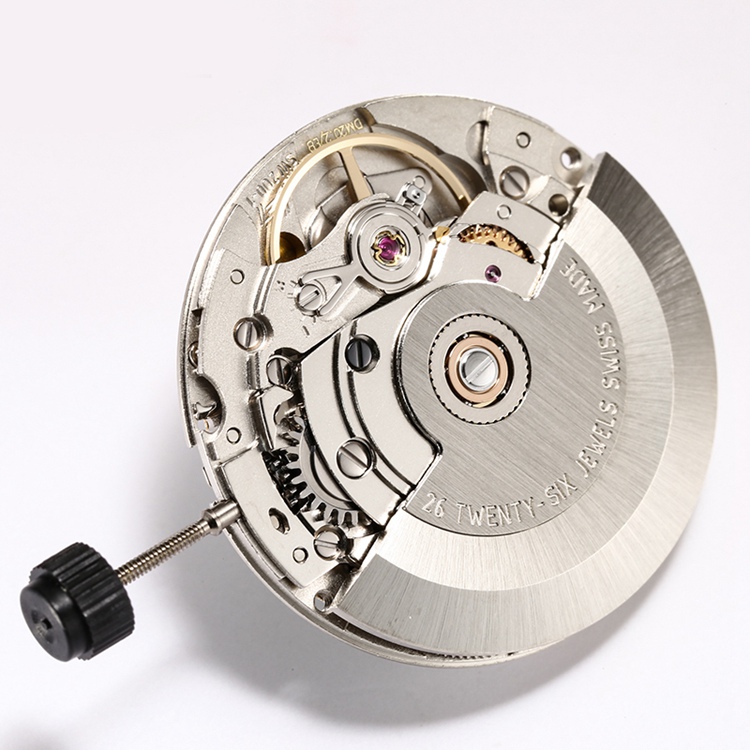
Winding Transmission System: Energy Transfer Efficiency
Once energy is captured by the rotor, it must be transferred efficiently to the mainspring through gears and reverser wheels. Consequently, this system plays a critical role in real-world performance rather than laboratory specifications alone.
From a wholesale buyer’s standpoint, winding transmission affects charging speed during normal wear, long-term resistance to wear, and stability across varied user habits.
In contrast to uni-directional systems, movements featuring bi-directional winding—such as those documented in ETA and Seiko technical standards—generally deliver superior efficiency for users with less active wrist movement. As a result, they tend to reduce customer complaints related to stopped watches.
Mainspring & Barrel: Energy Storage and Release
The mainspring barrel determines how much energy can be stored and how evenly it is released over time. Therefore, power reserve figures alone should never be evaluated in isolation.
Buyer-relevant indicators include total power reserve length, torque stability throughout the discharge cycle, and compatibility with additional complications.
Importantly, manufacturers such as Seiko Instruments Inc. (SII) emphasize that extended power reserves must be carefully balanced against torque consistency. Otherwise, amplitude drop may occur, negatively affecting accuracy and end-user perception. WatchTime – Mainspring & Barrel Fundamentals
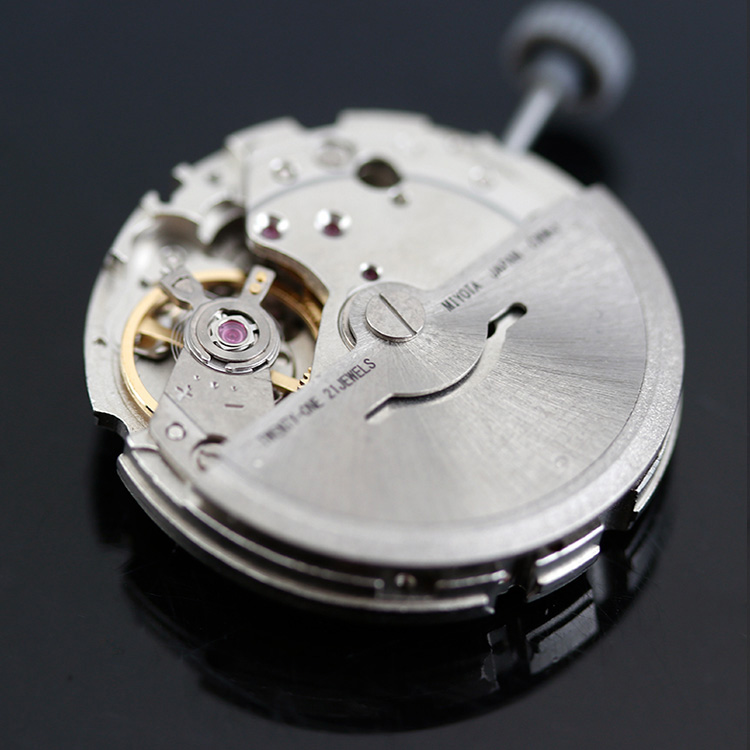
Rotor Design Types and Their OEM Implications
While internal architecture defines performance, rotor design also carries strong commercial implications. As such, OEM buyers should align rotor structure with market positioning.
Central rotors, for example, remain the most widely adopted solution. Because they offer lower production cost, easier servicing, and broad case compatibility, they are ideal for large-volume OEM programs using movements like Miyota 8215, NH35, or Sellita SW200.
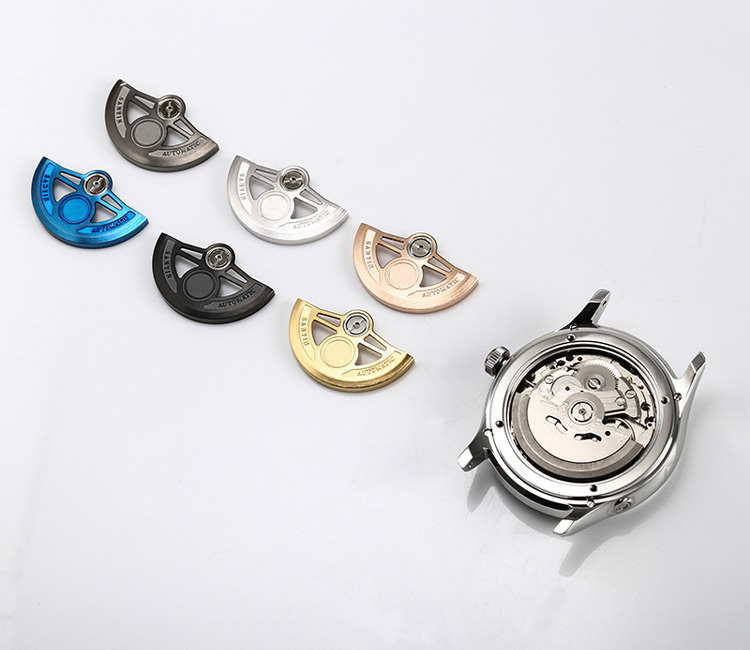
Meanwhile, skeletonized or decorated rotors serve a different purpose. Although they do not inherently improve performance, they significantly enhance perceived value. Therefore, they are often used as branding tools for exhibition caseback models, offering logo engraving and plating options that support B2C storytelling.
By contrast, peripheral rotors represent a premium positioning strategy. While they enable slimmer movement profiles and strong differentiation, they also introduce higher manufacturing complexity and cost. Consequently, they are typically reserved for high-end or limited-edition collections rather than mass OEM supply chains.
Caliber Corner – Sellita SW200 Technical Analysis
Winding Efficiency and End-User Experience
Ultimately, winding efficiency determines how the watch performs in everyday life. From a buyer’s perspective, poor efficiency frequently leads to customer complaints, increased return rates, and higher after-sales costs.
Technical studies from chronometry-focused institutions confirm that well-balanced rotors combined with optimized reverser wheels significantly reduce energy loss during wrist motion. As a result, watches maintain longer running time and greater reliability under real-world conditions. COSC – Chronometer Performance Standards
How OEM Buyers Should Evaluate Automatic Movements
Given these factors, OEM buyers should match movement structure to market positioning. Entry-level collections prioritize reliability and parts availability, mid-range brands benefit from efficient winding and slim profiles, while premium private labels gain value from decorative rotors and advanced architectures.
Before finalizing a movement, buyers should consistently ask suppliers whether the rotor is bi-directional, what bearing system is used, whether customization is supported, and how winding efficiency is tested under normal wear conditions.
In general, suppliers referencing ETA, Miyota, or Sellita technical specifications provide more transparent and standardized answers, reducing sourcing risk.
Conclusion: Turning Technical Insight into Better Buying Decisions
In conclusion, understanding automatic movement structure is not about becoming a watchmaker. Rather, it allows OEM and wholesale buyers to reduce risk, improve consistency, and align technical decisions with brand strategy.
A well-designed rotor and efficient winding system translate directly into higher customer satisfaction, lower service costs, and stronger long-term brand value. Therefore, evaluating movements through both technical performance and commercial practicality remains one of the most effective ways to build sustainable mechanical watch collections. Watcheshome Watch Manufactory