How Mechanical Watches Work
Introduction to Mechanical Watches
What Is a Mechanical Watch
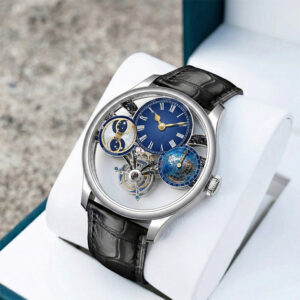
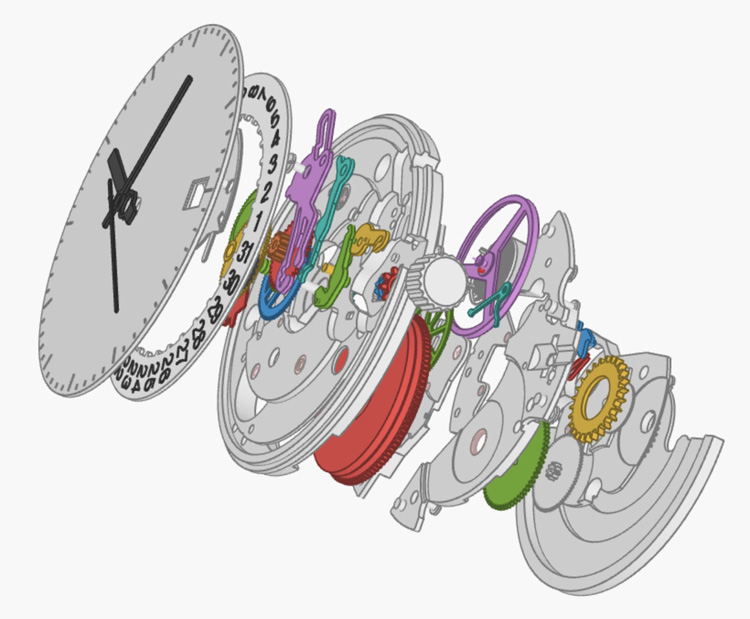
A mechanical watch is a precision instrument that measures time using a series of mechanical components powered by a coiled mainspring, without any electronic elements or batteries. It typically comprises 100 to 300 tiny parts, including gears, springs, and jewels, all meticulously assembled by hand or machine. Unlike quartz watches, which rely on battery-powered vibrations of a crystal, mechanical watches derive their energy from the unwinding of the mainspring, converted into regulated motion through the escapement and balance system for accurate timekeeping.
Core Principle of Operation
The fundamental operation begins with the mainspring releasing stored energy, which travels through the gear train to the escapement. The escapement delivers controlled impulses to the balance wheel and hairspring, which oscillate at a fixed rate (e.g., 28,800 vibrations per hour) to regulate the gear train’s speed, ensuring the hands advance accurately. This chain of energy transfer maintains the watch’s precision, with jewel bearings reducing friction at pivot points.
Main Power Source: The Mainspring and Barrel
Mainspring Storage
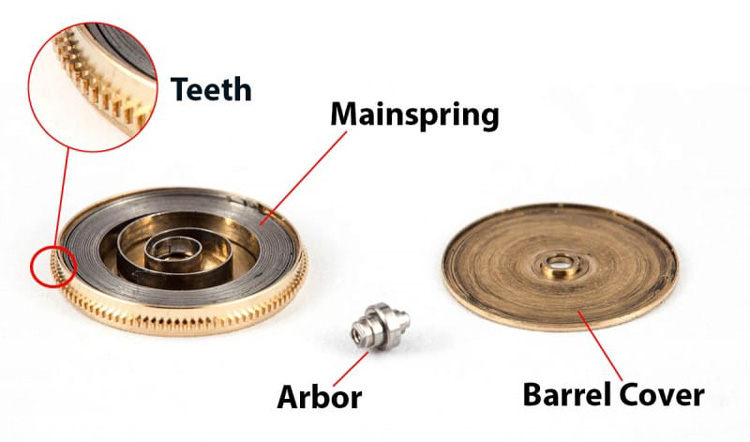
The mainspring is a long, flat ribbon of specialized steel alloy (such as Nivarox or Elinvar) coiled tightly within the barrel. When wound, it stores potential energy through tension; as it unwinds, it rotates the barrel arbor, providing consistent torque to the gear train. Modern mainsprings can deliver power for 38-80 hours, with advanced alloys resisting fatigue and temperature variations for better longevity.
(外部链接:Bob’s Watches – Rolex Mainspring Barrel Guide – https://www.bobswatches.com/watch-resources/rolex-mainspring-barrel)
Barrel Types
- Going barrel: The standard type in most mechanical watches, where the barrel directly engages the gear train via teeth on its lid, providing smooth power delivery but potentially uneven torque as the spring unwinds.
- Motor barrel: Used in high-end movements like those from A. Lange & Söhne, it incorporates a slipping bridle to maintain constant force, preventing overwinding and ensuring stable energy output.
Gear Train: Power Transmission
Wheel Train Structure
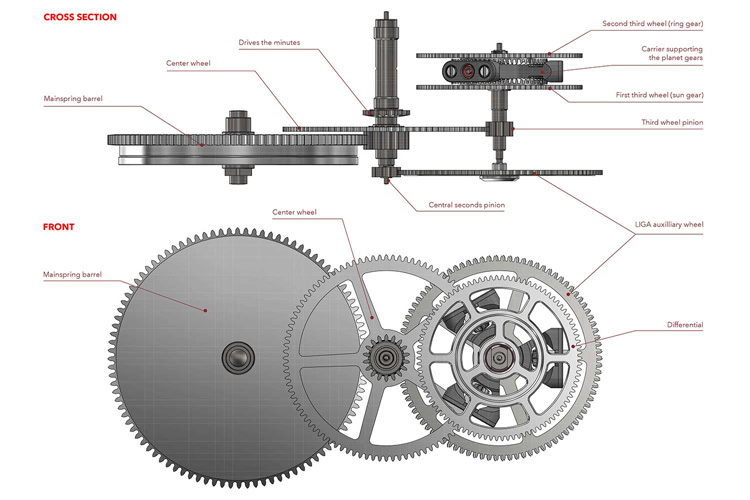
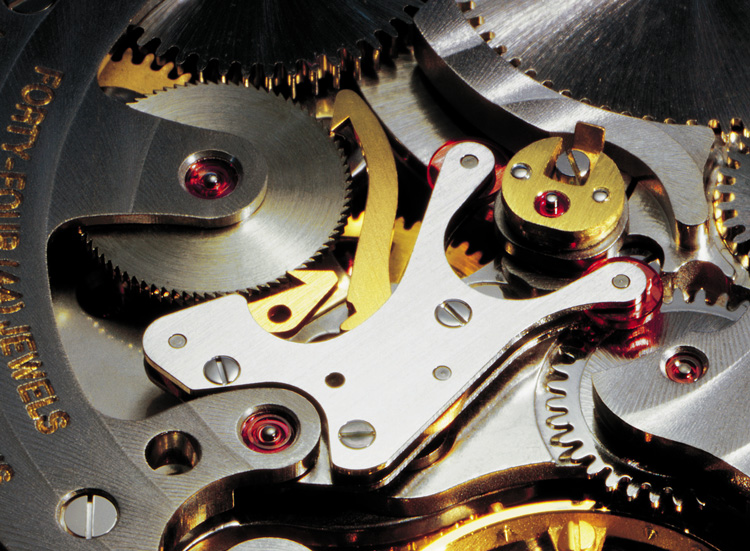
The wheel train is a series of intermeshed gears: the mainspring barrel drives the center wheel (rotating once per hour), which engages the third wheel, then the fourth wheel (once per minute), and finally the escape wheel. Each wheel has a pinion (small gear) and is supported by jewel bearings to minimize friction, with ratios designed to step down rotational speed from the barrel’s slow unwind to the escapement’s rapid impulses.
Functions
- Transfers torque from the barrel to the escapement while reducing rotational speed (e.g., barrel rotates slowly, escape wheel rapidly).
- Powers the motion works for hand movement, with the fourth wheel driving the seconds hand directly.
- Utilizes precise involute tooth profiles and 15-21 jewels to achieve efficiency, reducing energy loss to under 5% in high-quality movements.
Escapement: Heart of Timekeeping
Role of the Escapement
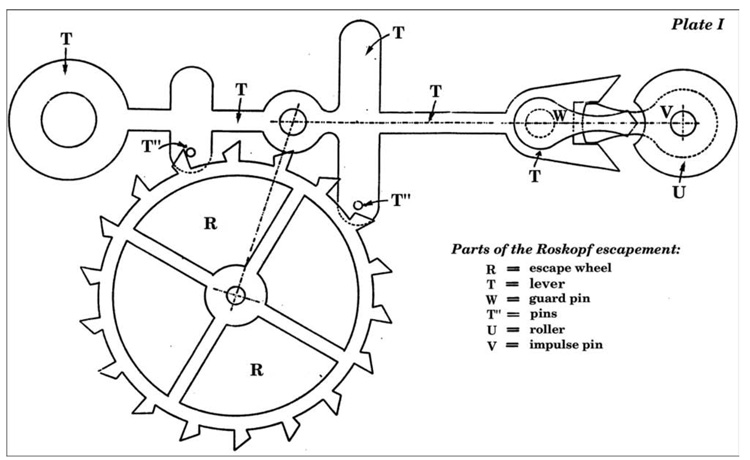
The escapement regulates energy release by locking the gear train and unlocking it in timed intervals, delivering impulses to the balance wheel while allowing it to oscillate freely. It prevents the mainspring from unwinding uncontrollably, ensuring the watch ticks at a consistent rate, typically with an audible “tick-tock” from the pallet fork’s interaction.
Common Types
- Swiss lever escapement: Features a pallet fork with ruby jewels that engages the escape wheel’s club teeth; used in over 90% of mechanical watches for reliability and ease of manufacture.
- Co-Axial escapement (Omega): Developed by George Daniels, it uses radial friction instead of sliding, reducing wear and extending service intervals to 10 years.
- Chronometer escapements: High-precision variants like the detent escapement in marine chronometers, optimized for minimal friction and superior isochronism.
(外部链接:Monochrome Watches – Omega Co-Axial Escapement Video – https://monochrome-watches.com/all-you-need-to-know-about-the-omega-co-axial-escapement-in-depth-video)
Regulating Organ: Balance Wheel and Hairspring
Balance Wheel
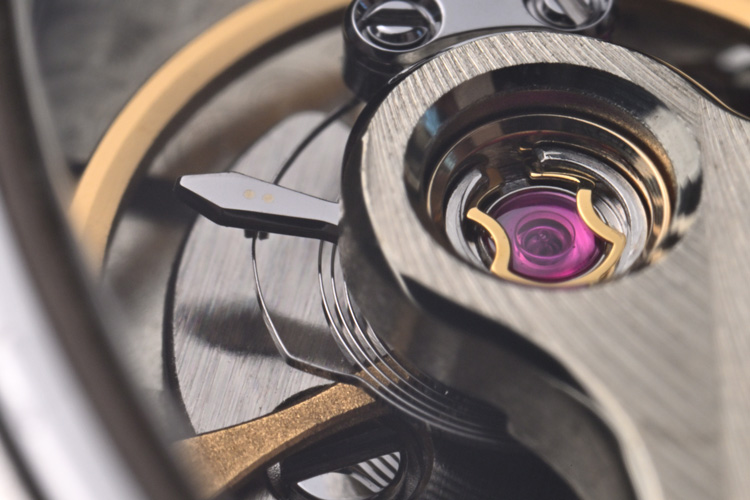
The balance wheel is a flywheel-like disc with a weighted rim, oscillating at frequencies like 28,800 vph (4 Hz). Made from glucydur alloy, it includes poising screws for fine adjustment, ensuring uniform inertia across positions.
Hairspring (Balance Spring)
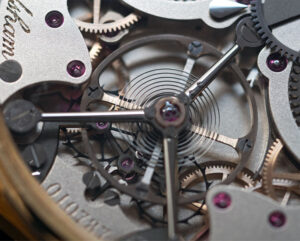
A spiral spring attached to the balance, providing restoring force for oscillation. Typically 20-30 cm long, made from Nivarox alloy or silicon, it contracts and expands to pull the wheel back to center.
(外部链接:Hodinkee – Watch Frequency and Balance Wheel – https://www.hodinkee.com/articles/watchs-frequency-hz-vph-meaning)
Key Factors for Precision
- Isochronism: Achieved through free-sprung systems or variable inertia balances.
- Temperature compensation: Nivarox alloys vary less than 0.6 sec/day per degree Celsius.
- Anti-magnetic properties: Silicon hairsprings withstand 15,000 gauss without deviation.
(外部链接:SJX Watches – Regulating a Mechanical Watch – https://watchesbysjx.com/2023/03/rate-regulators-mechanical-movement.html)
Winding and Power Delivery Systems
Manual Winding
Turning the crown rotates the winding stem, engaging the ratchet wheel to tighten the mainspring via the barrel arbor. A click mechanism prevents unwinding.
Automatic Winding (Rotor System)
A semi-circular rotor pivots on a central axis, swinging with wrist motion to wind the mainspring through reduction gears or pawl levers (e.g., Rolex bidirectional system).
Power Reserve
Standard reserves range from 38 hours (e.g., ETA 2824) to 80 hours (e.g., Rolex 3235), extended by twin barrels or optimized springs for consistent torque.
Time Display and Complications
Motion Works
From the fourth wheel, the cannon pinion drives the minute wheel, which turns the hour wheel, advancing the hands smoothly.
Common Complications
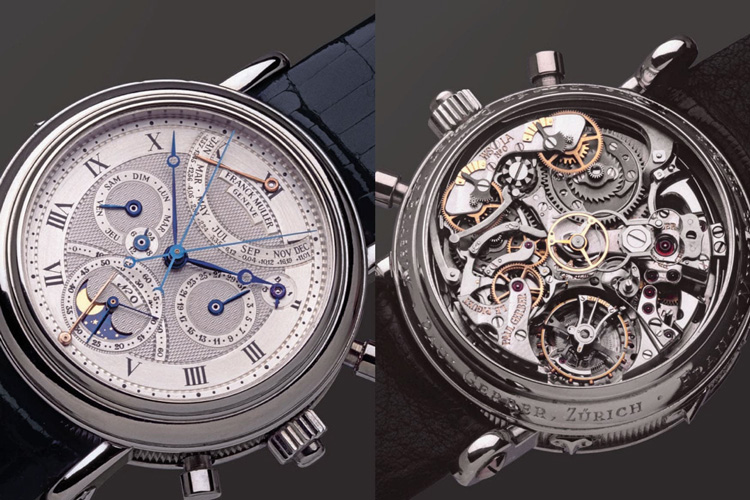
- Date: A wheel jumps at midnight, driven by the motion works.
- Chronograph: Independent gear train for start/stop/reset, as in Omega Speedmaster.
- Perpetual calendar: Accounts for leap years, seen in Patek Philippe models.
Accuracy, Regulation, and Certification
Factors Influencing Accuracy
Positional errors from gravity (up to 10 sec/day variance), temperature changes (±0.6 sec/°C), magnetism (halts above 60 gauss), and amplitude drop as power wanes.
(外部链接:Hodinkee – How Accurate Should Your Watch Be – https://www.hodinkee.com/articles/how-accurate-should-your-mechanical-watch-be)
Regulation Methods
Adjust via regulator index for hairspring length or poise screws on the balance; high-beat movements (36,000 vph) improve stability.
Certification Standards
- COSC: Tests cased movements in 5 positions and 3 temperatures, requiring -4/+6 sec/day.
- METAS: Stricter, includes 15,000 gauss magnetism, 0/+5 sec/day.
Conclusion: The Enduring Appeal of Mechanical Watches
Why Mechanical Watches Endure
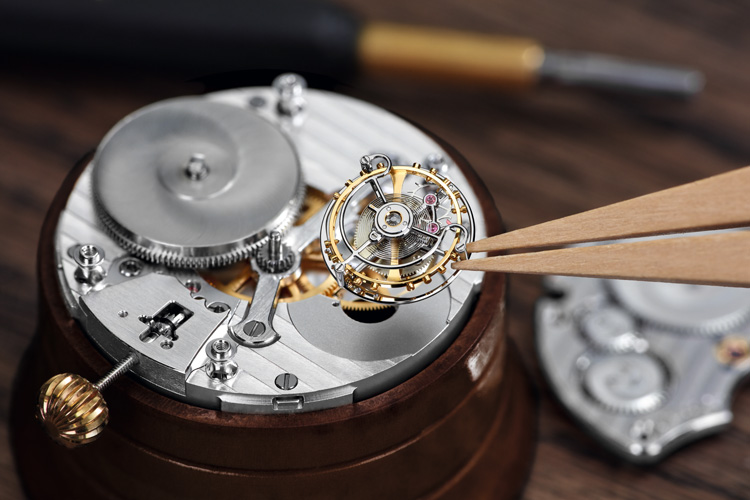
They embody centuries of craftsmanship, with self-sustaining mechanical energy and intricate hand-assembly, offering a tactile connection to time unlike digital alternatives.
From Tradition to Innovation
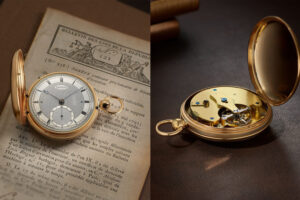
Evolving from 18th-century designs to modern innovations like silicon parts and extended reserves, mechanical watches blend heritage with technology for superior reliability in a digital era.