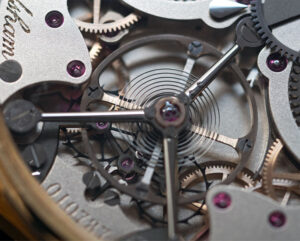

Mechanical watches are far more than instruments for telling time. In fact, they are the result of centuries of refinement in engineering, craftsmanship, and precision mechanics. As a result, for many enthusiasts and buyers alike, one question comes up again and again: how do mechanical watches work?
At their core, mechanical watches rely entirely on physical energy—no batteries, no electronics—just finely tuned components working in harmony. For this reason, understanding the internal structure of a mechanical movement is essential. In this guide, we take you inside a mechanical movement, explaining how each part functions and how they come together to create reliable, elegant timekeeping. Whether you are a watch enthusiast, a collector, or exploring mechanical watches for your brand, this article offers a clear and practical understanding of mechanical watch movements.
(Source: https://watcheshome.com/)
The Essential Components of a Mechanical Watch
A mechanical watch operates through a carefully balanced system where energy is stored, regulated, and transmitted with extreme precision. Together, these components form the foundation of mechanical timekeeping. Each part, however, plays a distinct and irreplaceable role.
The Mainspring: Storing Mechanical Energy
At the starting point of the system lies the mainspring, which serves as the primary energy source of a mechanical watch. When wound—either manually via the crown or automatically through wrist movement—it stores potential energy. As time passes, the mainspring gradually unwinds, delivering a steady and controlled flow of power to the movement. Consequently, this stored energy allows the watch to run continuously without electronic assistance.
The Escapement: Controlling Energy Flow
However, without regulation, the mainspring would release its energy far too quickly. This is where the escapement becomes critical. By locking and unlocking the gear train at precise intervals, the escapement ensures that power is released in a controlled and consistent manner.
Among various designs, the Swiss lever escapement is the most widely used today, valued for its durability, efficiency, and long-term reliability.
The Balance Wheel & Hairspring: Keeping Time
While the escapement controls energy flow, timekeeping accuracy itself depends on the balance wheel and hairspring. Often described as the “heartbeat” of the watch, the balance wheel oscillates back and forth under the influence of the hairspring. Each oscillation divides time into equal units. As a result, the frequency of this motion—measured in beats per hour—directly affects the watch’s accuracy and stability.
The Gear Train: Transmitting Motion
Meanwhile, energy must be transferred throughout the movement. This task is handled by the gear train—a sequence of finely machined wheels that transmit power from the mainspring to the escapement and hands. Through precise gear ratios, rotational speed is reduced step by step, ensuring that seconds, minutes, and hours advance smoothly and accurately.
The Pallet Fork: Precision in Motion
Connecting these systems is the pallet fork. Specifically, it links the escapement to the balance wheel. By engaging with the escape wheel, the pallet fork allows energy to pass in controlled impulses. In doing so, it maintains the rhythm of the balance wheel and preserves consistent timekeeping.
How Mechanical Watches Work: Step by Step
To better understand how these components interact, let’s follow the process step by step.
Step 1: Winding the Movement
In manual mechanical watches, turning the crown tightens the mainspring directly. In contrast, automatic watches use a rotor that converts wrist motion into winding energy. Despite the difference, both methods serve the same purpose: storing power in the mainspring.
Step 2: Energy Transmission Through the Gear Train
Once wound, the mainspring begins to unwind. At this stage, energy flows through the gear train. Each wheel carefully manages torque and speed, ensuring smooth and reliable motion throughout the movement.
Step 3: Time Regulation
Next, the escapement releases energy to the balance wheel in controlled increments. As this happens, the balance wheel oscillates at a steady frequency. This regulated motion ultimately determines the pace at which time advances.
Step 4: Displaying Time
After regulation, motion is translated into the rotation of the hour, minute, and second hands. Consequently, time is displayed clearly and consistently on the dial.
Step 5: Continuous Operation and Power Reserve
A mechanical watch continues running until the mainspring’s stored energy is exhausted. Typically, standard movements offer a power reserve of around 38–42 hours, indicating how long the watch can operate without additional winding.
Why Mechanical Watches Endure
Mechanical watches are admired not only for their function, but also for the craftsmanship they represent. After all, hundreds of components—often hand-assembled and finely adjusted—work together without electronic assistance. Furthermore, exhibition casebacks allow wearers to observe this mechanical artistry in motion.
Beyond aesthetics, mechanical watches offer remarkable longevity. With proper servicing, they can function for decades and often become heirlooms passed from one generation to the next.
Conclusion
Ultimately, understanding how mechanical watches work reveals why they continue to hold a special place in modern watchmaking. From the controlled release of energy to the rhythmic oscillation of the balance wheel, every component plays a role in precise and reliable timekeeping.
Mechanical watches are not merely tools—they are expressions of engineering heritage, patience, and craftsmanship. For enthusiasts, collectors, and brands alike, this enduring complexity is what makes mechanical timepieces truly timeless.
If you would like to explore mechanical watches further—whether for collection, OEM sourcing, or brand development—feel free to contact us. We are happy to provide expert guidance and tailored solutions.