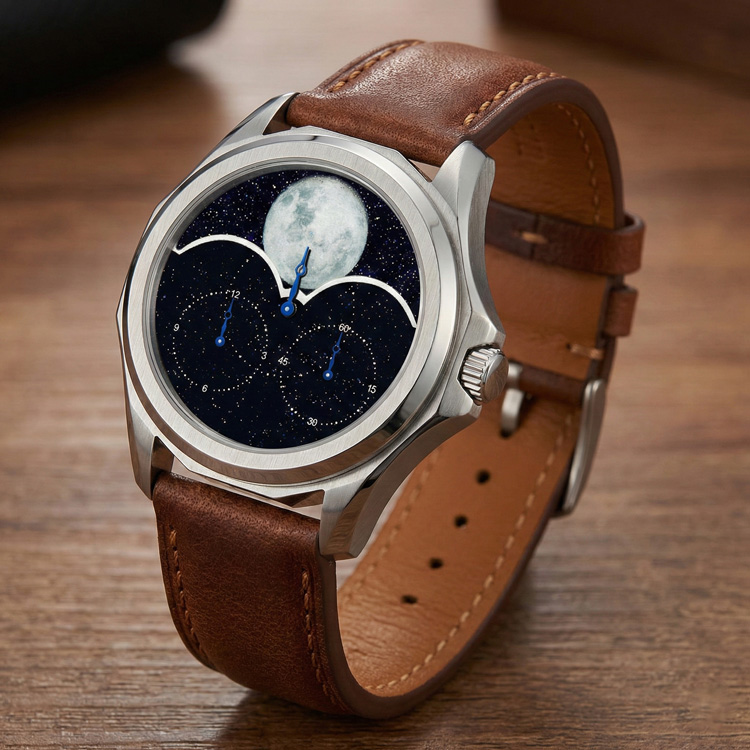
Introduction to Moonphase Watches
Definition and Core Function
A moonphase watch displays the current lunar phase—new moon, waxing crescent, first quarter, waxing gibbous, full moon, waning gibbous, last quarter, and waning crescent—through a rotating disc visible via a dial aperture. The disc advances once every 29.53 days (the synodic lunar month), synchronized with real celestial motion. Most implementations use a double-moon disc (two identical moons printed 180° apart) so one full rotation of the disc represents two lunar cycles.
Historical Significance
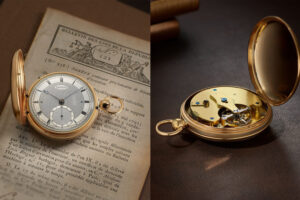
Moonphase complications first appeared in 18th-century pocket watches crafted by masters such as Abraham-Louis Breguet and Jaquet Droz. Early examples served both astronomical and decorative purposes. The complication transitioned to wristwatches in the early 20th century and gained renewed popularity in the 1990s–2000s as brands revived classic designs with modern precision.
Why Moonphase Watches Endure
Beyond functionality, moonphase watches connect wearers to the night sky and centuries of astronomical fascination. Their poetic, ever-changing display turns timekeeping into visible celestial poetry, making them prized by collectors who value romance alongside mechanical excellence.
How Moonphase Mechanisms Work
Basic Operating Principle
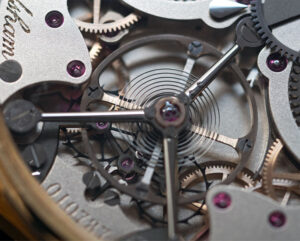
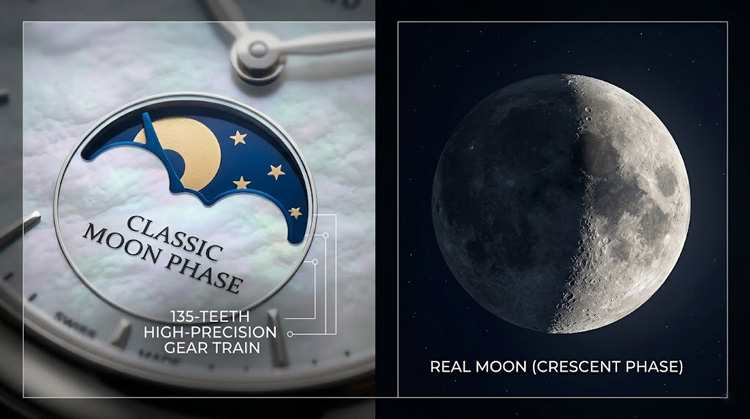
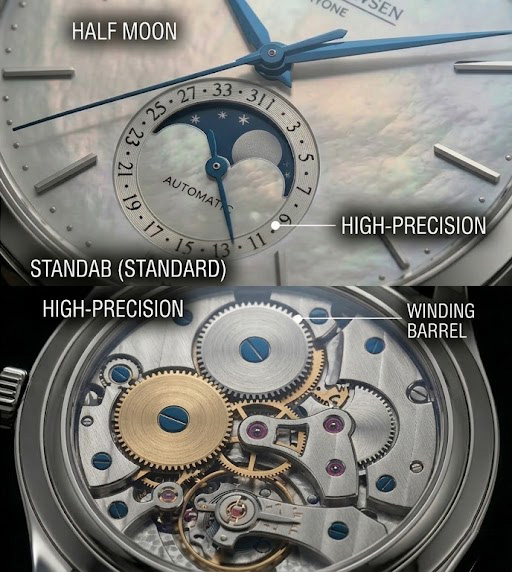
The moonphase disc is driven by a dedicated gear train connected to the hour wheel or a separate intermediate wheel. A 59-tooth wheel (most common) advances one tooth every 24 hours. Because the disc carries two moons, one complete rotation equals two lunar cycles (59 days). The aperture masks all but the current phase, creating the illusion of a waxing or waning moon.
Accuracy and Drift
Standard 59-tooth mechanisms drift approximately one day every 2.5–2.7 years. High-precision versions replace this with a 135-tooth wheel (or even more advanced differential gearing), reducing drift to one day every 122 years. Some ultra-precise constructions (e.g., Ochs und Junior) achieve accuracy over 3,000 years before correction is needed.
| Gear System | Drift Rate | Typical Examples |
|---|---|---|
| 59-tooth | ~1 day every 2.7 years | Most entry/mid-range moonphases |
| 135-tooth | ~1 day every 122 years | JLC, Patek Philippe, Lange |
| Advanced differential | >3,000 years | Ochs und Junior, select independents |
Integration with the Movement
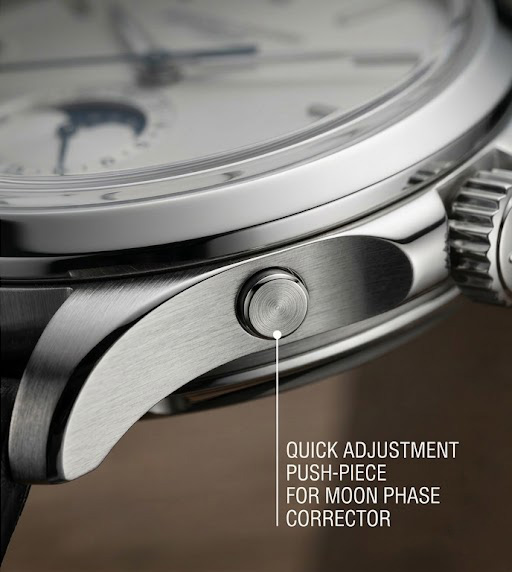
Moonphase modules are either added to base calibres (ETA 2824/2836, Sellita SW200) or fully integrated into in-house movements. Correction is usually via crown or dedicated pusher; many 2025 models offer quick-set systems that advance or retard the disc without stopping the watch.
Types of Moonphase Complications
Classic Single Moonphase
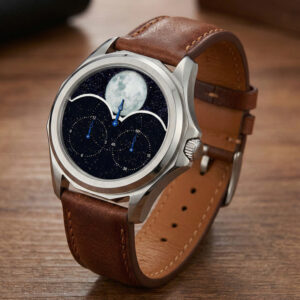
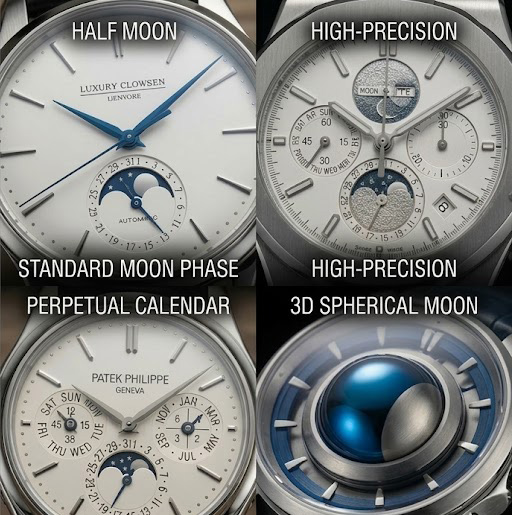
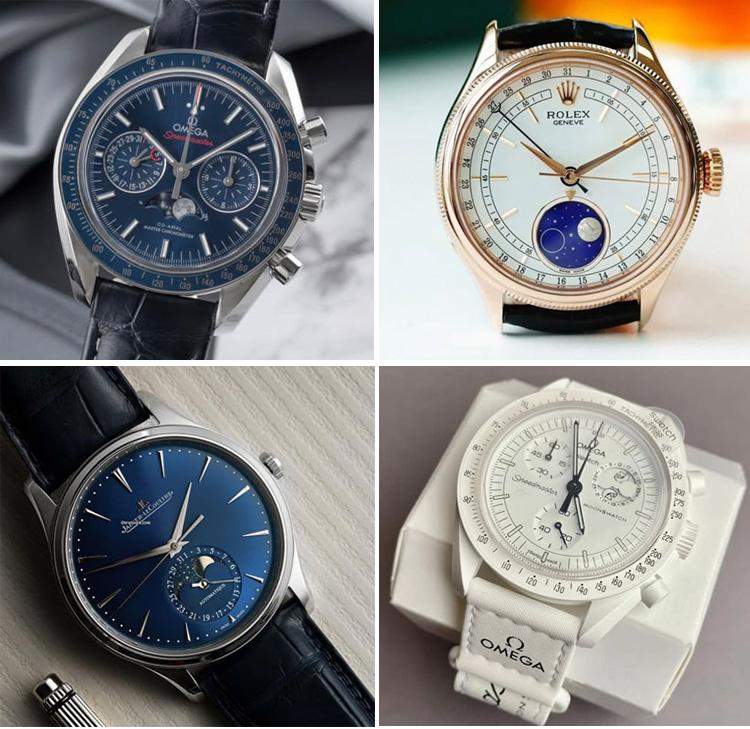
The traditional format shows one lunar disc through a single aperture, often framed by a starry sky or cloud texture. Iconic examples include the Jaeger-LeCoultre Master Ultra Thin Moon and Patek Philippe Ref. 5712.
Double Moonphase / Hemispherical Display
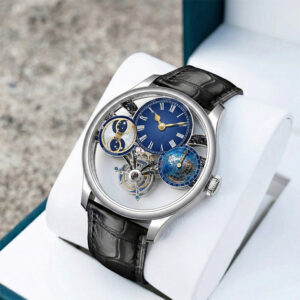
Simultaneous Northern and Southern Hemisphere phases (e.g., Glashütte Original Senator Moon Phase or Chopard L.U.C models). Some use a rotating globe-style disc for three-dimensional effect.
Triple Calendar Moonphase
Combines moonphase with full calendar functions—date, day, month, and often leap-year indication—in perpetual calendar layouts (Audemars Piguet Royal Oak Perpetual Calendar, IWC Portugieser Perpetual Calendar).
Flying Moonphase & Openworked Designs
Modern interpretations feature flying (no upper bridge) moon discs or fully skeletonized movements (Bulgari Octo Finissimo Moonphase, Ming 37.09 Moonphase), emphasizing lightness and mechanical transparency.
Technical Challenges and Precision Engineering
Lunar Cycle Synchronization
Exact synchronization with the 29.530588853-day synodic month demands complex gear ratios and minimal backlash. High-end movements use intermediate reduction wheels or differential gearing to achieve near-perfect alignment.
Power Reserve Impact
The additional friction and mass of the moonphase disc historically reduced autonomy. Contemporary solutions include high-torque barrels, constant-force mechanisms, and efficient gear trains that maintain 72–120+ hour power reserves even with the complication.
Accuracy and Adjustment
Most moonphase discs require manual correction only every few years. 2025 models increasingly feature quick-set crown positions or dedicated pushers, allowing owners to align the display with real lunar phases in seconds.
Aesthetic and Artistic Value
Visual Poetry and Dial Design
Moonphase apertures are framed with poetic details—hand-painted moons, aventurine starry skies, guilloché clouds, or laser-engraved gold discs. The complication adds narrative depth and emotional resonance to the dial.
Caseback and Exhibition Designs
Transparent casebacks reveal the rotating disc and movement finishing, turning the complication into a dynamic kinetic sculpture visible from both sides.
Materials and Finishing
Moon discs use mother-of-pearl, meteorite, or aventurine; apertures receive polished bevels, diamond-cut edges, or gem-set surrounds. Hand-finishing techniques (anglage, perlage, black polishing) elevate the complication to haute horlogerie level.
Key Brands and Iconic Moonphase Watches (2025–2026)
Heritage Masters
- Patek Philippe Nautilus Ref. 5712/1A
- Jaeger-LeCoultre Master Ultra Thin Moon
- Vacheron Constantin Patrimony Moonphase
Contemporary Innovators
- Bulgari Octo Finissimo Moonphase (ultra-thin record holder)
- A. Lange & Söhne Lange 1 Moonphase
- TAG Heuer Carrera Astronomer (2025 standout)
Accessible & Boutique Options
- Frederique Constant Slimline Moonphase
- Longines Master Collection Moonphase
- Ming 37.09 Moonphase (independent microbrand)
Maintenance and Practical Considerations
Accuracy Drift Correction
Standard models require correction every 2–3 years; precision 135-tooth versions drift only once every 122 years. Quick-set systems in modern watches make adjustment effortless.
Servicing Requirements
Moonphase mechanisms add complexity to disassembly. Professional servicing every 4–6 years is recommended to maintain accuracy and prevent wear on delicate gears.
User Adjustments
Most 2025 moonphase watches feature crown or pusher quick-correction, allowing owners to synchronize the display with real lunar phases without halting the movement.
Conclusion: The Enduring Appeal of Moonphase Watches
Beyond Functionality
Moonphase complications transcend utility, forging a poetic link between mechanical timekeeping and the eternal rhythm of the moon.
Future of Lunar Tracking
With ultra-thin movements, silicon components, artistic dial techniques, and ever-greater precision, moonphase watches continue to evolve as a pinnacle of haute horlogerie—blending engineering excellence with timeless celestial romance.
https://watcheshome.com/product/moonphase-starry-sky-watch/
References
- Hodinkee – Moonphase Guide
- Worn & Wound – Complications: Moonphase
- Teddy Baldassarre – Marvelous Moon-Phase Watches 2026