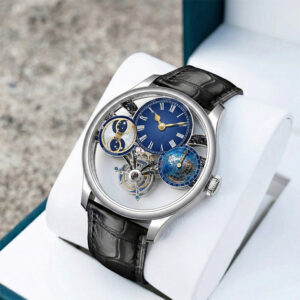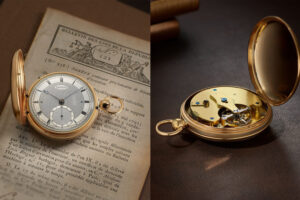
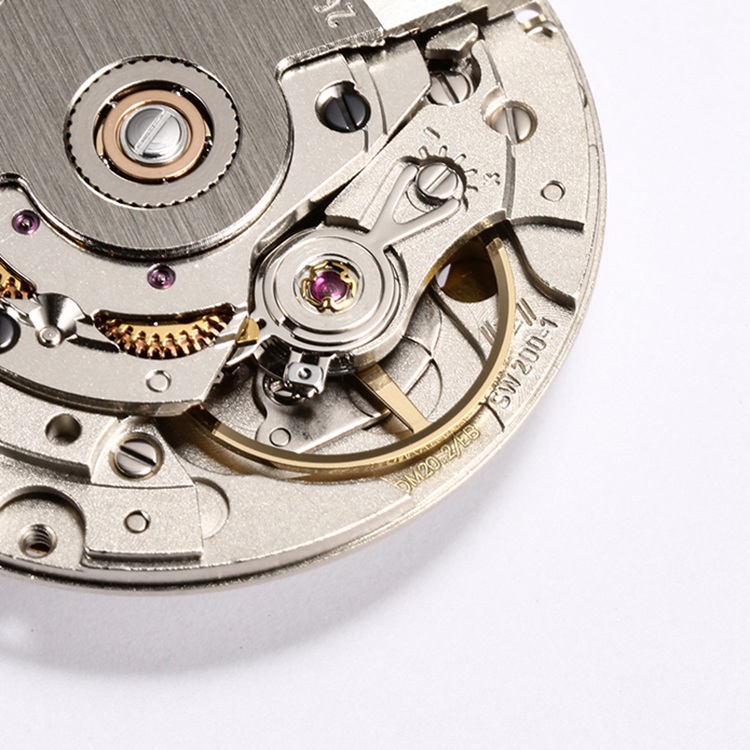
Introduction: Why Movement Origin Matters
For watch manufacturers, choosing between Swiss vs Japanese movement options directly influences product positioning, cost structure, long-term serviceability, and consumer perception. Movements determine accuracy, durability, assembly complexity, and margin potential.
Swiss calibers are known for prestige and craftsmanship. Japanese movements emphasize industrial reliability and mass-production efficiency.
According to the Federation of the Swiss Watch Industry (FH) and Japan Clock & Watch Association (JCWA), these two regions account for over 80% of global mechanical movement output by value.
This article compares the two from a manufacturer’s technical and strategic perspective rather than a marketing overview.
Movement Architecture & Performance Overview
| Category | Swiss Movements (ETA/Sellita) | Japanese Movements (Seiko/Miyota) |
|---|---|---|
| Beat Rate | 28,800 bph standard | 21,600–28,800 bph |
| Accuracy Range | ±12–15 sec/day; COSC −4/+6 | −10/+30 sec/day |
| Power Reserve | 38–80+ hours | 40–70 hours |
| Winding Efficiency | Medium | Very high (Miyota rotor efficiency) |
| Shock Protection | Incabloc / KIF | Diashock |
| Finishing | Geneva stripes, perlage, bevels | Minimal functional finishing |
| Servicing | Excellent long-term parts availability | Modular replacements; low service cost |
| Cost Level | High | Low to mid |
| Lead Time | 3–8 months | 1–3 months |
| Branding Position | Luxury / heritage | Reliable / tool-watch / value |
Movement Architecture & Design Philosophy
Swiss Movements
Swiss movements (ETA, Sellita, Soprod) prioritize:
-
High-precision assemblies with hand regulation
-
Modular construction enabling chronograph, moonphase, and GMT complications
-
Refined finishing: Geneva stripes, perlage, beveling
-
Chronometer emphasis, with many models certified under COSC (Contrôle Officiel Suisse des Chronomètres)
Manufacturers appreciate Swiss calibers because components are built for long-term servicing—bridges, screws, and escapement parts are highly standardized and replaceable.
Japanese Movements
Japanese brands (Seiko, Miyota/Citizen, Orient) follow a “functional engineering” philosophy:
-
Simplified, robust mechanisms optimized for industrial production
-
Highly efficient winding systems, such as Miyota’s 8215 and 9-series rotor design
-
Shock resistance, supported by technologies like Seiko’s proprietary Diashock, documented in Seiko Technical Guides
-
Minimalist decoration, prioritizing performance over aesthetics
Automation and consistency make Japanese movements favored by OEM/ODM manufacturers seeking stable supply and predictable tolerances.
Technical Specifications Comparison
Accuracy & Beat Rate
Swiss movements typically run at 28,800 bph, enabling smoother seconds-hand motion and finer regulation.
For example, ETA 2824-2 and Sellita SW200 have factory tolerances of ±12–15 sec/day, and their COSC versions achieve −4/+6 sec/day.
Japanese movements vary:
-
Seiko NH35: 21,600 bph, −20/+40 sec/day
-
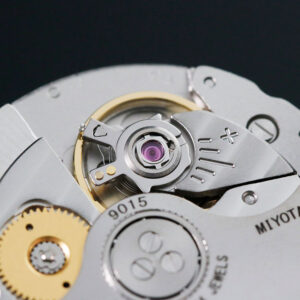
Miyota 9015: 28,800 bph, −10/+30 sec/day
(Accuracy data sourced from ETA Technical Documents, Sellita Specifications, Miyota Movement Data Sheets.)
Power Reserve & Energy Efficiency
-
Swiss movements: 38–80+ hours depending on barrel design SW200 Movement
-
Japanese movements: 40–70 hours, optimized through efficient automatic winding
The Swiss focus on dual-barrel architecture for high-end series (e.g., 70–80 hours).
Japanese movements excel in rotor efficiency, validated by Citizen’s documented “unidirectional winding system”.
Durability & Materials
-
Swiss: advanced alloys, anti-magnetic materials following ISO 764 standards
-
Japanese: tested for shock and corrosion under JCWA industrial durability protocols
Seiko’s 4R and 6R series are renowned for durability in tool watches.
Manufacturing Processes & Quality Control
Swiss Production
Swiss calibers involve:
-
CNC automation combined with hand assembly & adjustment
-
Multi-stage QC including amplitude testing, rate stability, and COSC chronometer certification
-
Costly labor and finishing, aligning with luxury branding
The Swiss FH reports that over 30% of manufacturing time is spent on regulation and finishing rather than machining.
Japanese Production
Japan’s watch factories—particularly Miyota’s Iida Plant and Seiko Instruments factories—are highly automated:
-
Robotic lubrication systems
-
Automated balance wheel adjustment
-
Statistical QC based on mass-production principles derived from the Toyota Production System (TPS)
This yields ultra-consistent tolerances suitable for large-scale OEM production.
Cost Structure & Supply Chain Considerations
Pricing Differences
-
Swiss movements are 2–4× the cost of Japanese equivalents due to finishing, certification, and labor.
-
Japanese movements maintain stable pricing thanks to automation and vertically integrated supply chains.
Based on OEM purchase data:
-
ETA/Sellita movements: mid–high cost
-
Miyota/Seiko movements: economical to mid-range
Lead Times & Availability
-
Swiss: 3–8 months lead time due to high global demand
-
Japanese: 1–3 months, with strong stock availability
Swiss suppliers often prioritize long-term contracts, while Japanese suppliers maintain larger ready-to-ship inventories.
Brand Positioning & Consumer Perception
Swiss Movements: Luxury & Heritage
Consumers perceive Swiss movements as:
-
Premium
-
Traditional
-
Highly finished
Ideal for:
-
Luxury mechanical collections
-
Heritage reissue models
-
Brands seeking Swiss Made certification (subject to Swissness Regulation, 60% movement value rules)
Japanese Movements: Modern Reliability
Japanese calibers signal:
-
Reliability and ruggedness
-
Functional, tool-watch identity
-
Strong value-for-money performance
Perfect for:
-
Microbrands
-
Sports, field, or dive watches
-
Large-volume OEM products
Which Movement Fits Your Product Strategy?
| Brand Strategy | Recommended Movement | Reason |
|---|---|---|
| High-end luxury | Swiss | Finishing, COSC potential, premium perception |
| Tool/sports watch | Japanese | Superior shock tolerance, low maintenance |
| Large-scale OEM | Japanese | Automation-friendly, stable supply |
| Limited edition | Swiss/Japan | Depends on narrative (craftsmanship vs engineering) |
| Entry-level automatic | Japanese | Cost-effective, reliable |
| Premium thin models | Swiss | Slim calibers (ETA 2892/SW300) |
Case Studies: Choosing the Right Movement
High-End Automatic Collection
Swiss movements preferred for:
-
Premium pricing
-
Finishing
-
COSC-level accuracy
Example: Sellita SW300 in slim luxury models.
Everyday/Tool Watch Series
Japanese movements offer:
-
Superior durability
-
Lower after-sales burden
Example: Seiko NH35 and Miyota 8-series widely used in diver watches.
Limited Editions
Either option depending on your narrative:
-
Swiss for craftsmanship
-
Japanese for innovation-driven storytelling
Conclusion: Choosing the Right Movement for Your Brand
The choice between Swiss vs Japanese movement is strategic:
-
Choose Swiss for heritage, luxury appeal, and superior finishing.
-
Choose Japanese for reliability, affordability, and consistent mass production.
For many brands, using both enables a multi-tier product architecture, covering entry-level, mid-tier, and premium segments.