
Introduction to Automatic Rotor Design
The Role of the Automatic Rotor
The automatic rotor — a semi-circular weighted mass — oscillates freely with wrist motion to wind the mainspring via a gear train. This mechanism converts kinetic energy into stored potential energy, enabling self-winding without batteries or manual intervention. Bidirectional systems in modern designs capture movement in both directions, achieving up to 80% winding efficiency in daily wear.

Historical Significance and Ongoing Innovation
Invented in the 1920s, automatic rotor design transformed wristwatches from daily-winding necessities into convenient perpetual mechanisms. Evolution focused on efficiency, reduced thickness, noise minimization, and aesthetic exposure, progressing from clunky bumpers to silent ceramic bearings and visible peripheral systems that showcase movement artistry.
Early Developments (1930s–1950s)
Bumper and Early Full-Rotor Systems
John Harwood patented the first automatic wristwatch in 1923, commercialized in 1928 with a swinging bumper rotor limited to 180-degree oscillation. Springs buffered impacts at endpoints, producing audible “bumps” while protecting the movement. This system wound unidirectionally and required significant wrist activity for full power.

Pioneering Full 360-Degree Rotors
Rolex revolutionized the field in 1931 with the Perpetual rotor, a central 360-degree oscillating weight on a pivot. This enabled smoother bidirectional winding (later refined) and greater efficiency. Eterna advanced durability in 1948 with five ball bearings supporting the rotor, reducing friction and noise compared to earlier bushings.

Mid-Century Refinements (1960s–1980s)
Micro-Rotor Integration
Buren and Patek Philippe introduced the micro-rotor in the 1950s–1960s, embedding a smaller off-center weight into the mainplate level. This reduced overall thickness to under 3mm, ideal for elegant dress watches. Patek’s Caliber 240 (1977 onward) exemplifies this with a 22k gold mini-rotor and platinum counterweight for balanced winding.

Material and Bearing Advancements
Manufacturers shifted from ruby jewels to ceramic ball bearings (zirconia or silicon nitride) for near-frictionless rotation and longevity. Heavier tungsten or gold alloys improved inertia, while bidirectional pawl systems (like Seiko’s Magic Lever) doubled winding efficiency in everyday use.
Modern Innovations (1990s–Present)
Peripheral Rotor Technology
Carl F. Bucherer patented the peripheral rotor in 2008 (CFB A1000 series), mounting the oscillating ring on the movement’s outer edge via ceramic bearings. This clears the center for full mechanism visibility through sapphire casebacks while maintaining slim profiles under 9mm total thickness.
Efficiency and Aesthetic Enhancements
Watcheshome crafted from premium brass reinforced with tungsten, each rotor is decorated with mesmerizing spiral guilloché patterns, reflecting the artistry and dedication behind every detail. The circular design and refined finishing ensure optimal energy transmission, seamlessly transforming the natural motion of your wrist into reliable power for your watch movement.
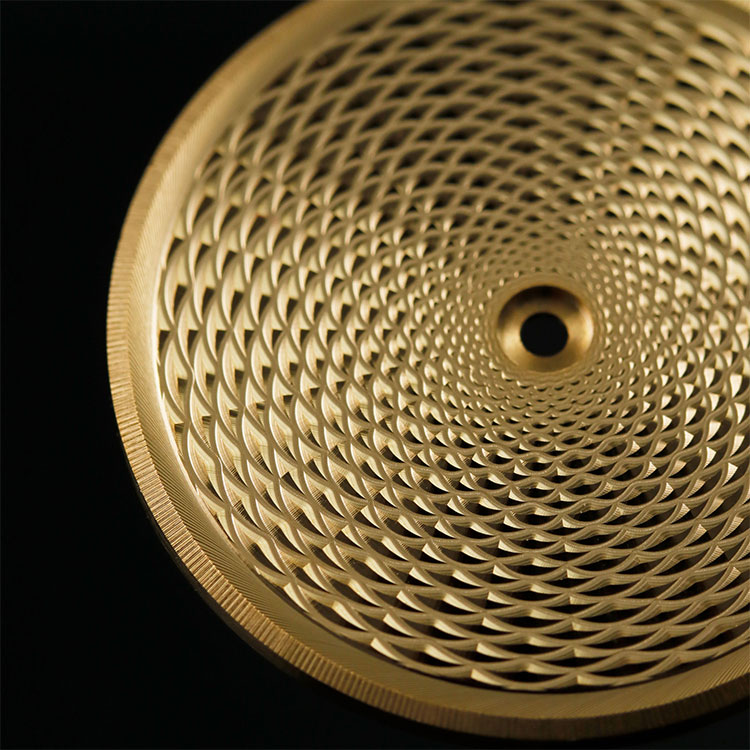
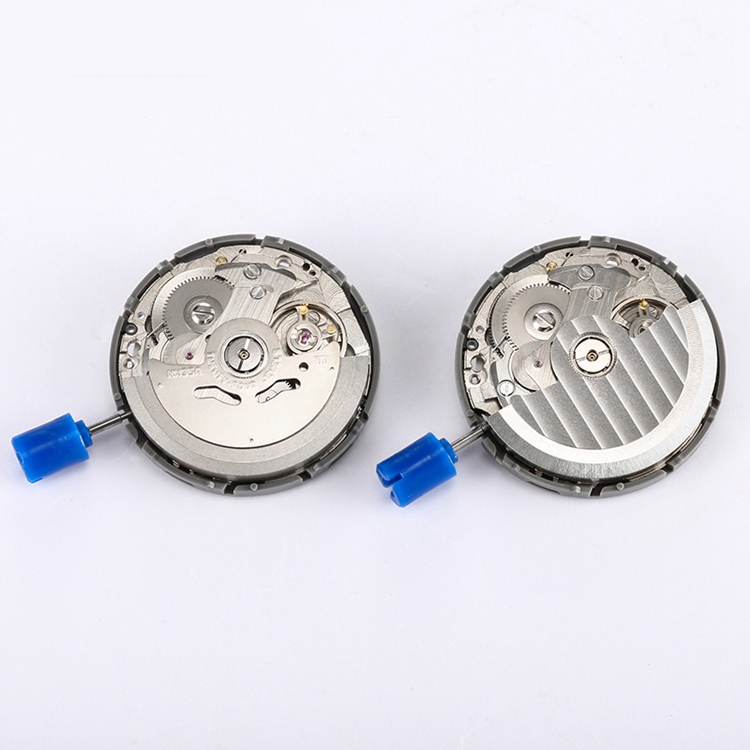
Contemporary rotors feature skeletonization, hand-engraving, or gem-setting in 22k gold or platinum for visual drama. Optimized geometries and low-friction coatings achieve winding rates up to 30% faster, often with custom decorations matching brand DNA (e.g., Geneva stripes or perlage).
Sustainable and High-Performance Variants
Recent designs incorporate recycled precious metals and shock-resistant mounts. Some hybrid concepts explore solar or kinetic augmentation, though pure mechanical rotors remain dominant for purists seeking tradition with modern reliability.
Conclusion: The Future of Automatic Rotor Design
Balancing Tradition and Technology
Automatic rotor design evolves toward silent, efficient, and visually integrated solutions, preserving mechanical purity while embracing material science advances.
Implications for Collectors and Manufacturers
Thinner profiles, enhanced visibility, and personalized aesthetics make modern automatics more desirable. Collectors value historical pieces for innovation milestones, while manufacturers leverage rotor technology for differentiation in competitive markets.