Introduction
In the contemporary watchmaking landscape, luxury is no longer defined solely by heavy mass or traditional precious metals. On the contrary, modern consumers demand timepieces that deliver peak performance without sacrificing daily comfort. This rising demographic includes active professionals, outdoor adventurers, and watch enthusiasts alike. Therefore, brand owners and wholesalers must adapt to capture this market. To achieve this, you need materials that bridge the gap between extreme durability and effortless wearability. Consequently, the Titanium mechanical watch has emerged as the premier solution. By offering an unmatched strength-to-weight ratio and natural skin compatibility, titanium has evolved significantly. Indeed, it is no longer just a specialized aerospace material, but the new gold standard for high-performance, everyday luxury horology.
1. Grade 2 vs. Grade 5 Titanium: The Metallurgical Reality
To strategically position a titanium collection, brands must understand the critical distinctions between the two primary grades of titanium utilized in lightweight watch manufacturing.
Grade 2 Titanium: Pure and Resilient
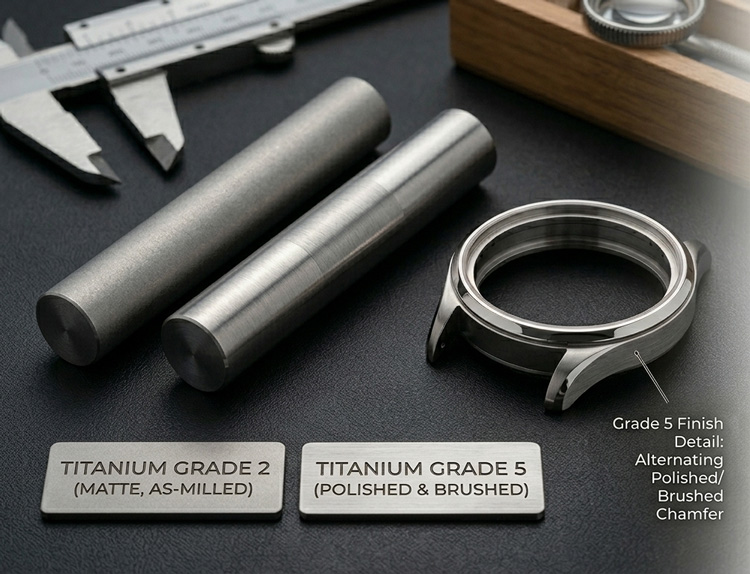
Grade 2 is commercially pure, unalloyed titanium. Because it possesses excellent corrosion resistance, it remains highly workable. As a result, this material is an excellent choice for classic tool watches. In particular, it perfectly suits designs that favor a darker, matte-grey sandblasted or satin aesthetic.
Grade 5 Titanium: The Aerospace Powerhouse
For high-end luxury watchmaking, Grade 5 titanium ($Ti\text{-}6Al\text{-}4V$) stands as the true industry benchmark. It is alloyed with 6% aluminum and 4% vanadium. Because of this composition, Grade 5 completely shifts the paradigm of watch architecture:
-
Enhanced Hardness: Grade 5 is significantly harder than Grade 2. Furthermore, it easily surpasses standard 316L stainless steel by boasting a structural yield strength that outperforms traditional alloys.
-
Premium Finishing: This superior hardness yields incredible benefits. For instance, it allows our factory to apply high-end mirror polishing and precise brushed satin finishes. Crucially, these treatments are physically impossible to achieve on softer Grade 2 substrates.
Technical Material Comparison: Titanium vs. Steel
| Engineering Property | Grade 2 Titanium | Grade 5 Titanium | 316L Stainless Steel |
| Chemical Nature | Commercially Pure | Alpha-Beta Alloy ($Ti\text{-}6Al\text{-}4V$) | Austenitic Iron Alloy |
| Density (Weight) | ~4.51 $g/cm^3$ | ~4.43 $g/cm^3$ (45% Lighter than Steel) | ~8.00 $g/cm^3$ |
| Vickers Hardness | ~150 – 200 HV | ~300 – 350 HV | ~150 – 200 HV |
| Tensile Strength | Moderate (~480 MPa) | Extremely High (~950 MPa) | Moderate (~500 MPa) |
| Biocompatibility | Absolute (Nickel-Free) | Absolute (Nickel-Free) | Variable (Contains Nickel) |
2. Biological Superiority: The Hypoallergenic Case
One of the most powerful consumer-facing selling points of a titanium timepiece is its status as a completely biocompatible metal.
Eliminating Nickel Allergies
Traditional stainless steel watch cases contain varying percentages of nickel. This applies even to high-grade 316L or 904L alloys. Unfortunately, this nickel can leach onto the skin over prolonged contact. As a consequence, it frequently triggers contact dermatitis in sensitive individuals. In contrast, a genuine hypoallergenic watch case crafted from Grade 2 or Grade 5 titanium contains zero nickel.
The Science of the Oxide Layer
Why does this metal perform so well? Upon exposure to oxygen, titanium instantaneously forms a dense, continuous, and highly stable passive oxide film ($TiO_2$). This protective layer prevents the metal from reacting with human sweat, salt water, or bodily acids. Therefore, it ensures the watch remains entirely inert against the skin. Ultimately, this reaction provides absolute comfort during intense physical activity or humid everyday wear.
3. Manufacturing Mastery: Overcoming the Machining Barrier
While the physical benefits of titanium are undeniable, its unique mechanical properties present severe manufacturing obstacles. Consequently, entry-level facilities cannot easily navigate this production process.
The Challenges of CNC Titanium Machining
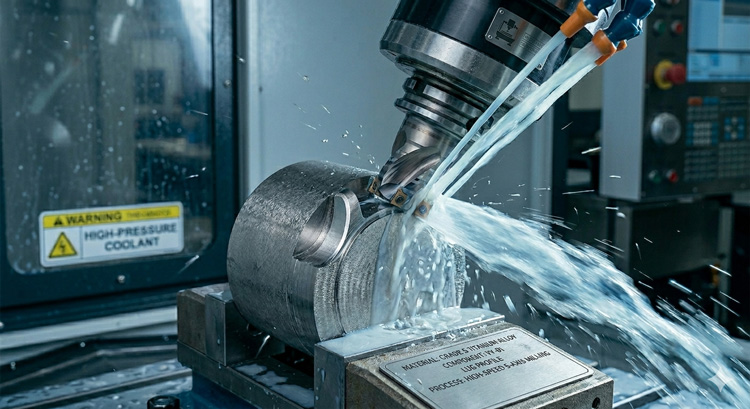
Titanium possesses low thermal conductivity. Additionally, it exhibits high chemical reactivity at elevated temperatures. During CNC titanium machining, heat does not dissipate through the metal chips. Instead, the thermal energy concentrates directly on the cutting edge of the tool. This phenomenon causes the metal to become “sticky.” As a result, it leads to rapid tool wear, micro-welding, and severe case deformation if the milling speeds and cooling pressures are not flawlessly regulated.
Factory-Level Solutions for Daily Wear
However, as an advanced manufacturing facility, we implement specific, high-tier protocols. These steps successfully transform raw titanium into pristine horological components:
-
High-Pressure Cooling Systems: First, our multi-axis CNC machines utilize specialized synthetic cutting fluids under ultra-high pressure. This setup instantly pulls heat away from the workpiece to ensure micron-level machining tolerances.
-
Proprietary Scratch-Resistant Coating: Second, we tackle surface vulnerability. While titanium boasts an incredible strength-to-weight ratio, it is prone to surface scuffs in everyday environments. To combat this daily wear issue, our finished cases can undergo specialized surface hardening or physical vapor deposition (PVD) scratch-resistant coating processes. Consequently, this raises surface hardness significantly.
-
Strict Certification Standards: Finally, we verify durability. Our complete titanium watch builds are engineered and tested to comply with international durability benchmarks. These include ISO 1413 for shock resistance and ISO 6425 for dive-ready hermetic seals. Therefore, we guarantee their survival in any demanding environment.
4. The Business Case: Why Brands Must Evolve to Titanium
For wholesalers and brand owners, market saturation in the traditional steel sector has driven margins down. Transitioning a portion of your portfolio to titanium offers distinct commercial advantages:
-
Premium Market Positioning: Titanium allows brands to command a higher retail price tier by directly targeting consumers looking for “everyday carry” (EDC) utility, premium sports gear, or hypoallergenic health solutions.
-
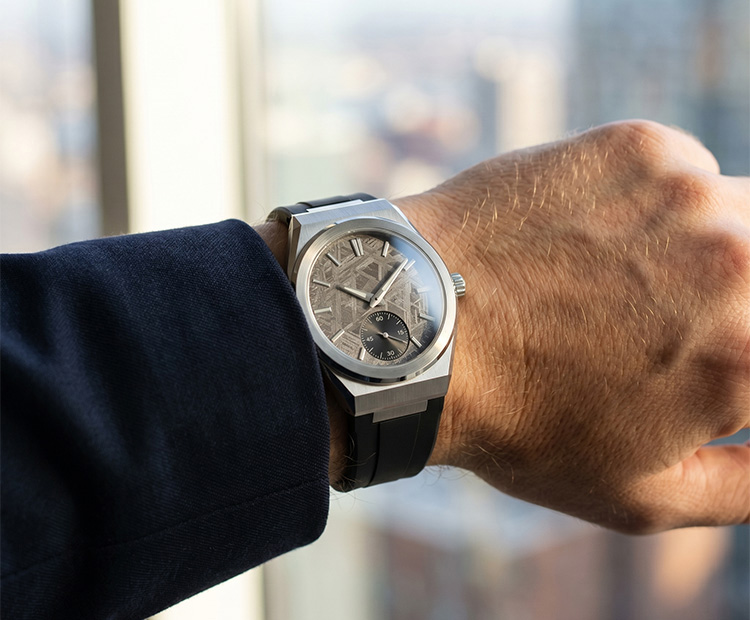
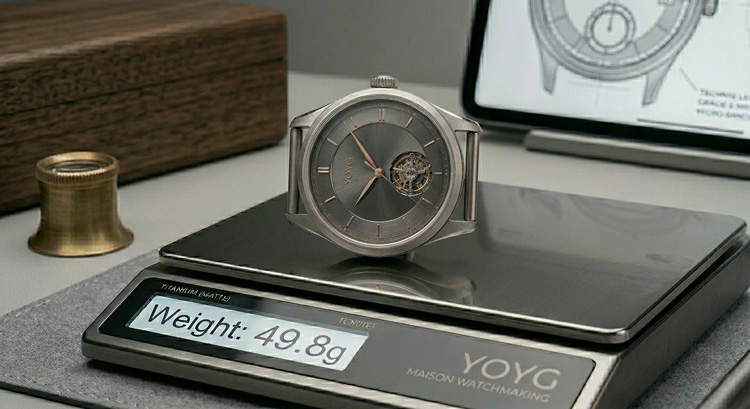
Uncompromised Mechanical Synergy: Because a titanium chassis reduces overall case mass by up to 45%, it allows brands to integrate larger, more robust high-beat automatic calibers or complex complications without creating a watch that feels excessively heavy or cumbersome on the wrist.
Conclusion: Future-Proofing Your Watch Collections
The modern watch enthusiast expects a timepiece to endure the rigors of daily life without causing fatigue or skin irritation. By harnessing the absolute biocompatibility of a hypoallergenic watch case and combining it with the structural dominance of aerospace-grade alloys, titanium represents the future of everyday tool and luxury horology.
Launch Your Titanium Lineup Today https://watcheshome.com/