Introduction
In an era of mass-produced components, the Enamel watch dial remains one of the few elements of horology that cannot be perfected by machines alone. For brand owners and wholesalers, enamel represents the ultimate value tier—a marriage of chemistry, patience, and extreme heat. While modern coatings may mimic the look, nothing captures light or history quite like Grand Feu enamel. This ancient technique ensures that a timepiece is not just a tool for measuring time, but a canvas for fade-resistant color that lasts for centuries.
1. The Alchemy of Grand Feu: Mastery Through Fire
The “Great Fire” Technique
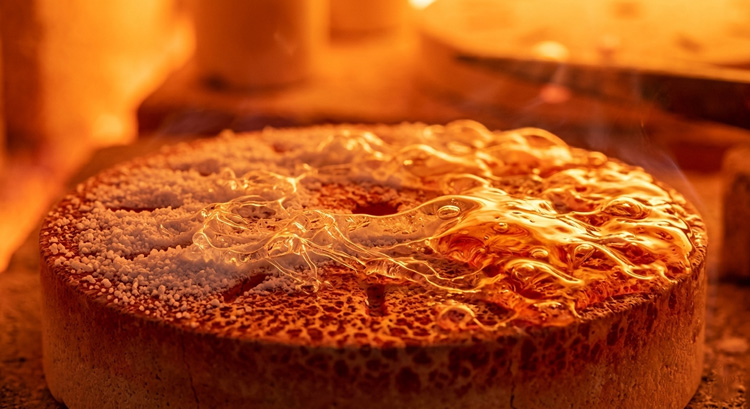
The term Grand Feu enamel refers to the “Great Fire” process, where layers of silica glass powder are fused to a metal base at temperatures exceeding 800°C.
-
The Layering Process: An artisan applies multiple thin layers of enamel powder, firing the dial in a kiln after each application.
-
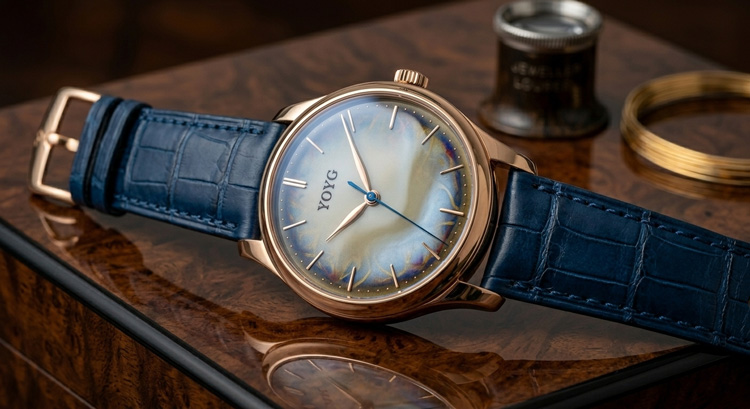
Chemical Stability: Because the color is fused into the glass at high temperatures, it is immune to UV degradation, ensuring a vibrant, milky finish that will never oxidize or peel.
The Challenge of the Manufacturing Rejection Rate
The prestige of an enamel dial is largely dictated by the dial manufacturing rejection rate. Even a microscopic air bubble or a hairline crack during the final firing can render a dial useless. In high-end manufacture, the rejection rate can exceed 50-70%, making every successful piece a rare triumph of artisanal watchmaking.
2. Artistic Varieties: Cloisonné and Miniature Painting
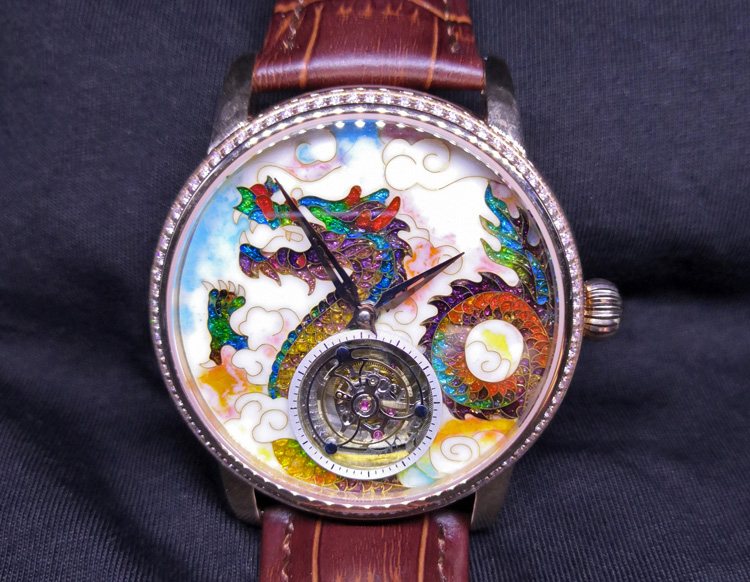
Cloisonné Enamel Watch Production
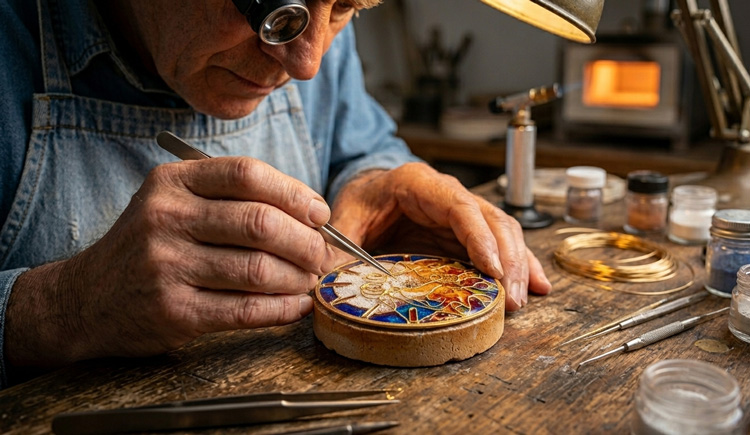
A Cloisonné enamel watch is created by forming intricate patterns using gold wire thinner than a human hair. These “cells” (cloisons) are then filled with colored enamel. This technique is highly sought after by collectors for its three-dimensional depth and vibrant storytelling.
Miniature Painting on Enamel
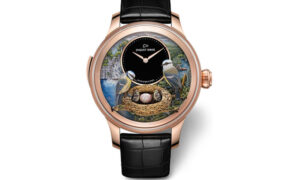
For the most exclusive commissions, miniature painting involves using a single-hair brush to apply enamel pigments. This requires a master artist who understands how colors change during the firing process, as the final shade only reveals itself after the heat of the kiln.
Comparison: Enamel vs. Standard Lacquer Dials
| Feature | Standard Lacquer/Printed | Grand Feu / Cloisonné Enamel |
| Material Base | Synthetic Resin / Paint | Silica Glass Powder / Mineral Oxides |
| Production Temp | Ambient / Low Heat | 800°C – 1200°C (High-Temperature) |
| Longevity | May fade or crack over 20+ years | Permanent (Fade-resistant for centuries) |
| Failure Rate | Low (<1%) | High (30% – 70% Rejection Rate) |
| Market Tier | Entry to Mid-Level | Ultra-Luxury / Haute Horlogerie |
3. Engineering the Foundation: Precision and Compliance
The Metal Substrate
While the art is in the glass, the science is in the base. We utilize specialized copper or gold alloys that expand at the same rate as the enamel to prevent warping. This level of luxury watch craftsmanship ensures that the dial remains perfectly flat, allowing for the precise fitment of hands and complications.
Standards and Quality Control
Our manufacturing process adheres to the highest industry benchmarks. While enamel is an artistic pursuit, the final timepiece must meet rigorous functional standards, such as ISO 1413 for shock resistance, ensuring the delicate enamel surface is protected by a robust case and movement architecture. Furthermore, our pigments are sourced to comply with REACH environmental regulations regarding heavy metal content.
4. Why Brand Owners Prioritize Enamel
For wholesalers and brand owners, an enamel collection is a statement of intent. It moves a brand away from “fashion” and into “investment-grade” horology.
-
Bespoke Exclusivity: Every dial is slightly different due to the organic nature of the firing process.
-
Higher Margins: The high barrier to entry for enamel production allows brands to command a significant premium.
Conclusion: An Eternal Legacy in Glass
The Enamel watch dial is the ultimate expression of the “human touch” in watchmaking. By embracing High-temperature firing and traditional Cloisonné techniques, a brand ensures its watches will remain as vibrant in two hundred years as they are today.
Commission Your Artistic Vision
Elevate your brand with the “Great Fire.”
As a premier watch manufacturer, we specialize in the R&D and production of bespoke enamel dials. Whether you require the pure elegance of a Grand Feu white dial or the intricate detail of a Cloisonné landscape, our artisans are ready to bring your vision to life.