High-Beat Movements: Why 28,800 vph Matters for Accuracy
EXECUTIVE SUMMARY (At a Glance for Brand Owners):
The 4Hz Advantage: 28,800 vph provides superior dynamic shock recovery and minimizes position-based gravitational errors compared to 3Hz (21,600 vph) calibers.
Luxury Positioning: The fluid 8-step-per-second sweep instantly boosts perceived brand value and justifies higher retail margins.
Factory Reliability: Our facility resolves high-frequency wear using synthetic Moebius lubrication, hardened pallets, and ISO 3159 multi-position timing regulation.
Introduction
In precision watch manufacturing, speed directly dictates stability. For watch brand owners and enterprise wholesalers, selecting the right movement caliber is the single most critical decision impacting product reputation and warranty claims. While entry-level timepieces often settle for lower frequencies, the high-beat watch movement—specifically operating at 28,800 vph—represents the ultimate engineering sweet spot. It seamlessly combines mechanical watch accuracy with long-term automatic caliber reliability. Consequently, mastering this 4Hz frequency allows your brand to command premium market pricing while drastically reducing aftermarket returns.
1. The Physics of Frequency: 4Hz vs. 3Hz
To strategically market a luxury collection, brand owners must understand the physical forces driving movement accuracy.
Understanding the Oscillation Rate
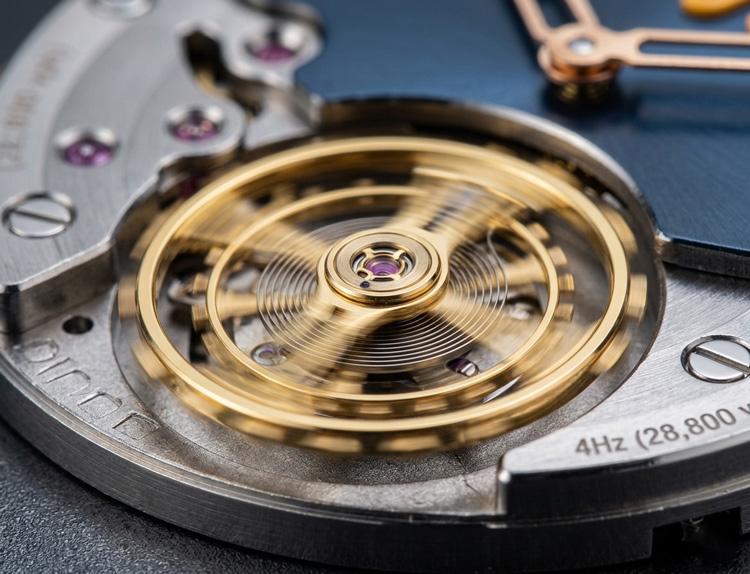
A watch movement’s frequency is measured in vibrations per hour (vph) or Hertz (Hz). A 28,800 vph movement operates at a 4Hz frequency. Therefore, the balance wheel oscillates back and forth four times per second (yielding 8 discrete beats per second).
-
Superior Isochronism: First, higher frequencies allow the balance spring to “average out” gravitational errors far more effectively than a standard 3Hz (21,600 vph) alternative.
-
Rapid Shock Recovery: Second, a 4Hz balance wheel possesses higher rotational kinetic energy. Consequently, when a wearer drops or bumps the watch, the 4Hz movement returns to its stable rhythmic rate instantly.
-
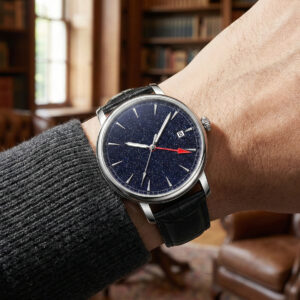
The Smooth Sweeping Seconds: Beyond numerical data, the most visible commercial benefit is the fluid sweeping seconds hand. While a 3Hz watch exhibits a noticeable stutter (6 micro-steps per second), a 28,800 vph caliber delivers a continuous, luxury glide (8 micro-steps per second).
2. Engineering for Isochronism and Inertia
Technical Performance Matrix: 3Hz vs. 4Hz Calibers
| Engineering Benchmark | Standard Beat (21,600 vph / 3Hz) | High-Beat (28,800 vph / 4Hz) | B2B Commercial Impact |
| Oscillation Rate | 6 Beats Per Second | 8 Beats Per Second | Enables higher chronometric precision. |
| Rate Stability | Moderate Isochronism | Superior Isochronism | Reduces customer accuracy complaints. |
| Shock Recovery | Standard Reset Time | Rapid Kinetic Reset | Ideal for sports and diver watch builds. |
| Visual Motion | Noticeable Ticking | Premium Smooth Glide | Justifies higher retail price points. |
| Target Market | Entry-Level / Tool Watches | Luxury / Chronometer Tier | Elevates brand positioning. |
3. Manufacturing Mastery: Resolving Lubrication & Friction
A common concern among wholesalers is whether higher velocity accelerates movement wear. As an advanced manufacturing facility, we solve these engineering challenges through strict metallurgical and chemical protocols.
Specialized High-Velocity Lubrication
Higher speeds generate increased kinetic friction. To prevent premature wear, our watchmakers utilize specialized, high-viscosity synthetic oils from Moebius. These synthetic lubricants stay precisely in place on the escape wheel teeth, ensuring the escapement never runs dry under high velocity.
Hardened Escapement Components
Furthermore, critical components like the escape wheel and pallet stones are finished to micron-level tolerances. We implement advanced surface-hardening treatments to ensure these high-contact components survive years of continuous high-beat operation.
ISO-Compliant Multi-Position Regulation
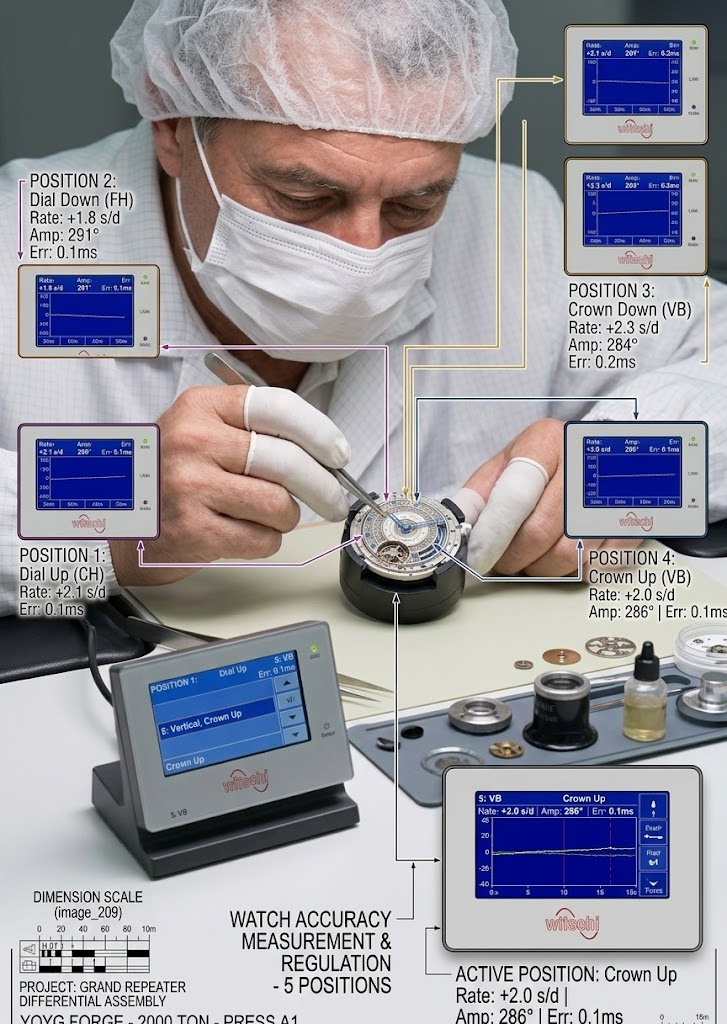
Finally, every high-beat caliber leaving our factory undergoes strict multi-position timing regulation. We align our testing procedures with ISO 3159 chronometer standards. This rigorous process guarantees that whether the watch rests dial-up, dial-down, or crown-down, its daily variance remains strictly controlled.
4. The Business Case: Why Brands Must Upgrade to 28,800 vph
For independent microbrands and established enterprise wholesalers, transitioning to 28,800 vph platforms (such as Miyota 9015, Sellita SW200, or ETA 2824 equivalents) provides a distinct market advantage:
-
Command Higher Profit Margins: Consumers naturally associate a smooth-sweeping seconds hand with high-end luxury. Therefore, upgrading to 4Hz allows you to position your collection in a significantly higher retail price bracket.
-
Lower Warranty and Return Rates: Because 4Hz calibers resist daily physical shocks and wrist movements far better than 3Hz engines, your brand will experience fewer post-sale returns due to timing inaccuracies.
Conclusion: Elevate Your Lineup with High-Beat Reliability
In conclusion, adopting a high-beat watch movement is the most direct pathway to elevating your brand’s market reputation. By pairing the natural accuracy of a 4Hz frequency with our factory’s advanced lubrication and multi-position regulation, you offer your customers a product built to global luxury standards.
Partner with Our Movement Engineering Team
Build your next collection on a foundation of uncompromised precision.
As an elite, full-service watch manufacturer, we specialize in the custom integration, regulation, and OEM production of high-frequency 28,800 vph timepieces. Contact our engineering team today to request movement specifications, MOQ requirements, and custom sample production timelines.