Introduction to Skeleton Watches
Definition and Core Concept
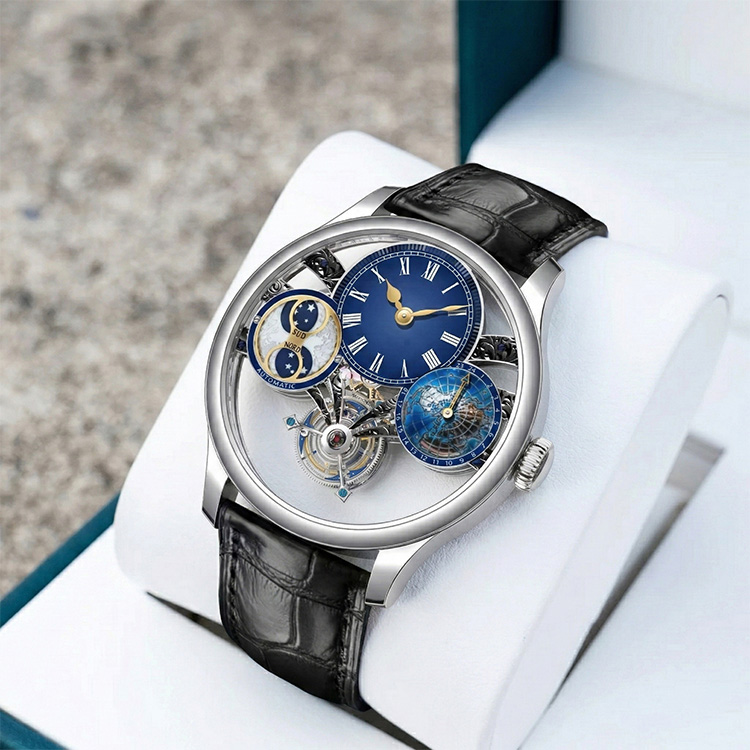
A skeleton watch deliberately removes large sections of the dial and movement plates to expose the inner workings—mainplate, bridges, gear train, balance wheel, escapement, and jewels—creating a transparent “see-through” architecture. Every component becomes part of the visual display, transforming functional horology into kinetic art. Modern skeleton watches typically retain only the essential structural elements, often using sapphire crystals front and back for unobstructed views.
Historical Origins
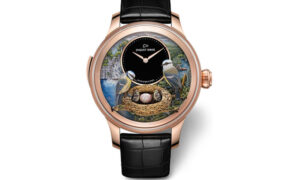
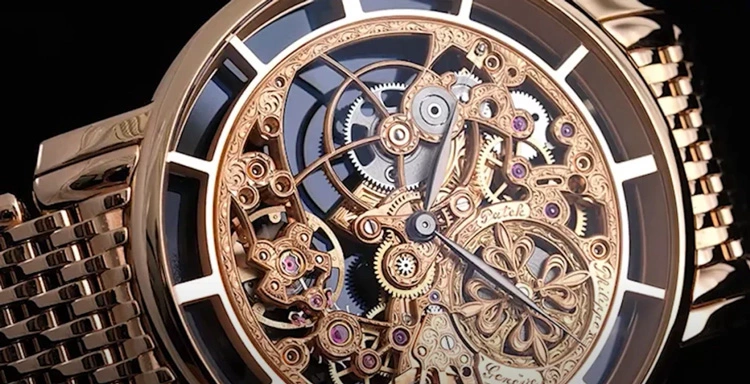
Skeletonization began in the late 18th century with French and Swiss pocket watches crafted for European nobility. Master engravers like those at Breguet and Jaquet Droz hand-sawed and filed plates into intricate patterns purely for decoration. The style reached wristwatches in the 1970s–1980s through pioneers like Corum and Audemars Piguet, exploding in popularity during the 2000s with ultra-lightweight materials and high-end maisons.
Why Skeleton Watches Captivate Collectors
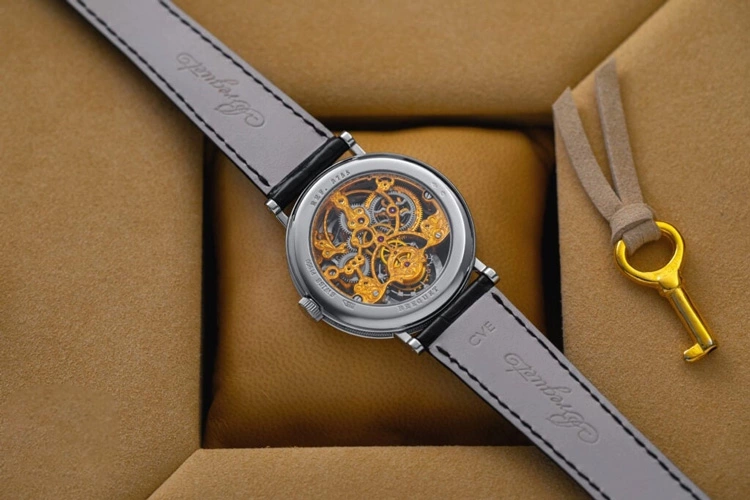
They offer complete mechanical transparency, revealing the artistry of hand-finishing, jewel placement, and dynamic motion. Collectors value the “living” dial that changes with every tick and the emotional connection to centuries of horological mastery.
Technical Aspects of Skeletonization
Movement Skeletonization Process
Watchmakers use CNC milling, wire EDM (electrical discharge machining), and laser cutting to remove up to 70% of non-structural material from bridges and mainplates. Every cut must preserve perfect gear alignment and torsional rigidity. High-end examples employ Grade 5 titanium or cobalt-chrome alloys for strength-to-weight ratios far superior to traditional brass.
Structural Integrity Challenges
Removing mass risks flexing under torque or vibration. Solutions include strategic ribbing, thicker bridge profiles, and tension-relief designs. Modern skeletons maintain full power reserve and accuracy despite the open architecture.
Finishing and Decoration Techniques
Exposed surfaces receive extensive hand-finishing: bevelled anglage, perlage on mainplates, straight Geneva stripes on bridges, mirror-polished screw heads, and sometimes hand-engraving or gem-setting. Black polishing and PVD coatings create dramatic light play.
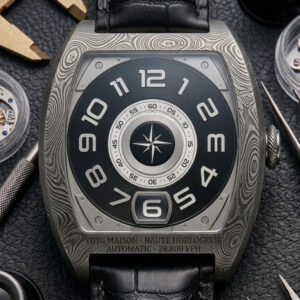
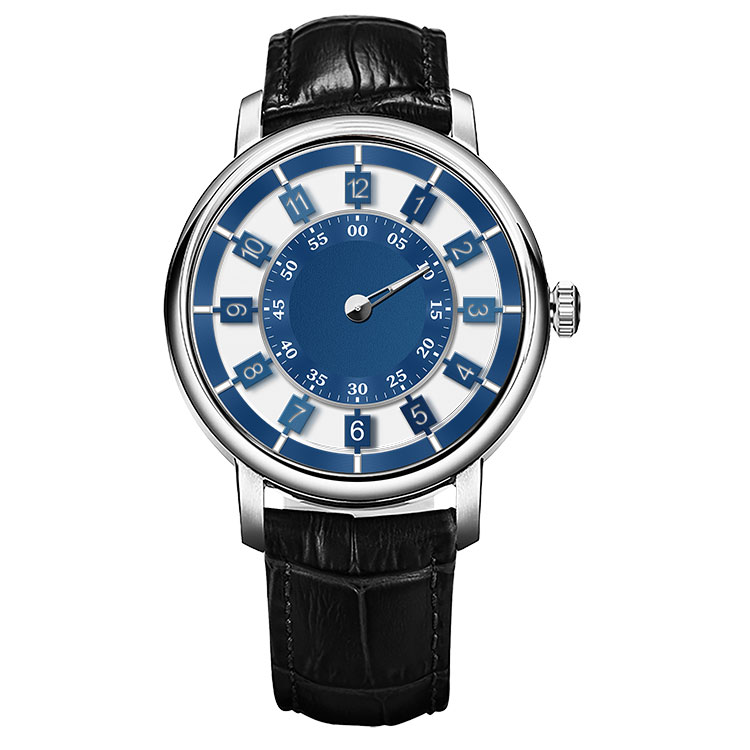
Floating Hours, Infinite Depth
Each marker is precision-machined with chamfered edges and high-polish finishes, catching light from every angle to form crisp, three-dimensional outlines.
The luminous blocks glow softly, leaping forward with each passing moment, while the central blue sub-dial and outer minute track provide sharp contrast and perfect readability.
Types and Styles of Skeleton Watches
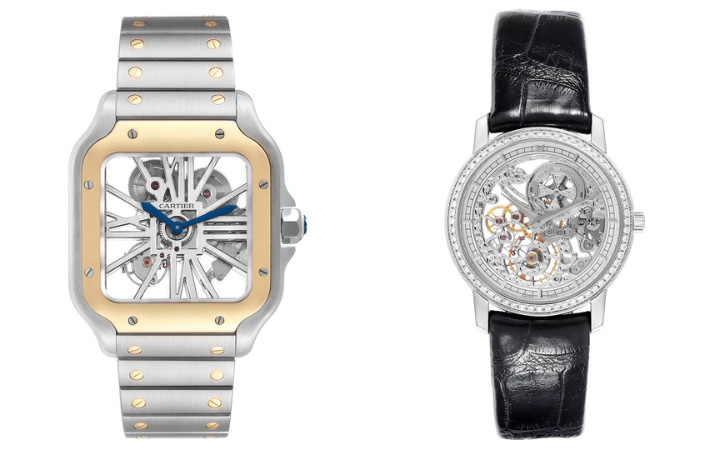
Full Skeleton vs Partial Skeleton
| Type | Dial Coverage | Visibility Level | Typical Examples | Legibility |
|---|---|---|---|---|
| Full Skeleton | Almost entire movement | Maximum | Hublot Big Bang Unico, Richard Mille RM | Lower |
| Partial Skeleton | Selective openings | Balanced | Audemars Piguet Royal Oak Openworked | Higher |
Flying Tourbillon & Double/Triple Skeletons
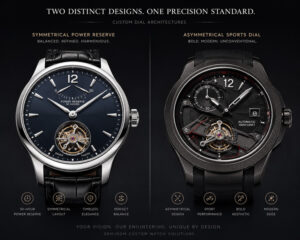
Advanced models integrate flying tourbillons (no upper bridge) or multi-axis cages within fully skeletonized movements. Greubel Forsey’s Double Tourbillon 30° and Girard-Perregaux Triple Tourbillon exemplify three-dimensional openwork.
Artistic and Themed Skeletons
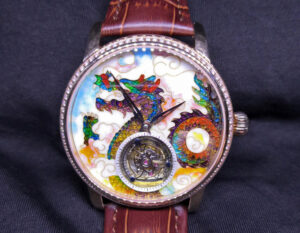
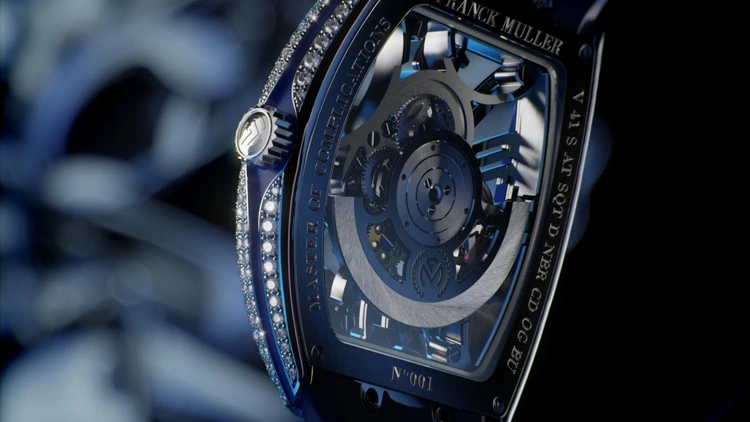
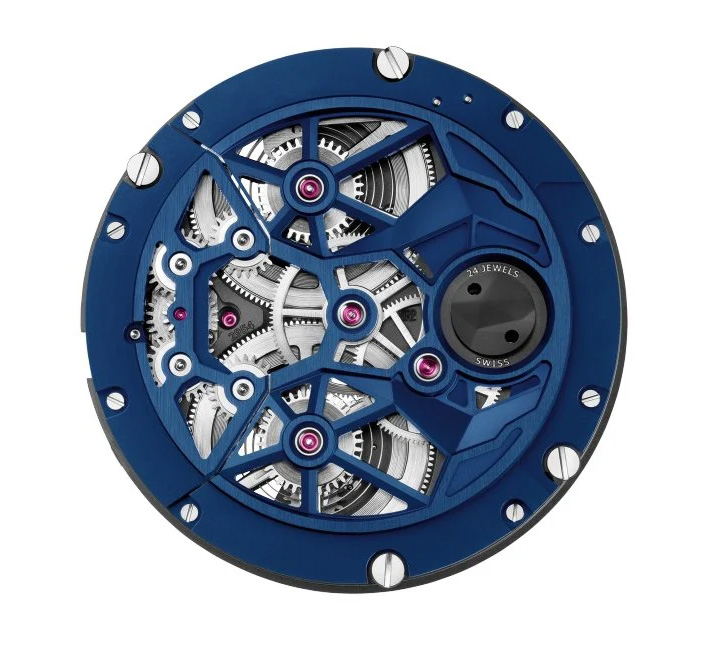
Brands apply thematic engraving (floral motifs, geometric patterns), gem-setting on bridges, or vibrant PVD colors. Franck Muller and Jacob & Co. push artistic boundaries with diamond-set skeletons and three-dimensional sculptures.
Key Brands and Iconic Skeleton Watches
Luxury Segment
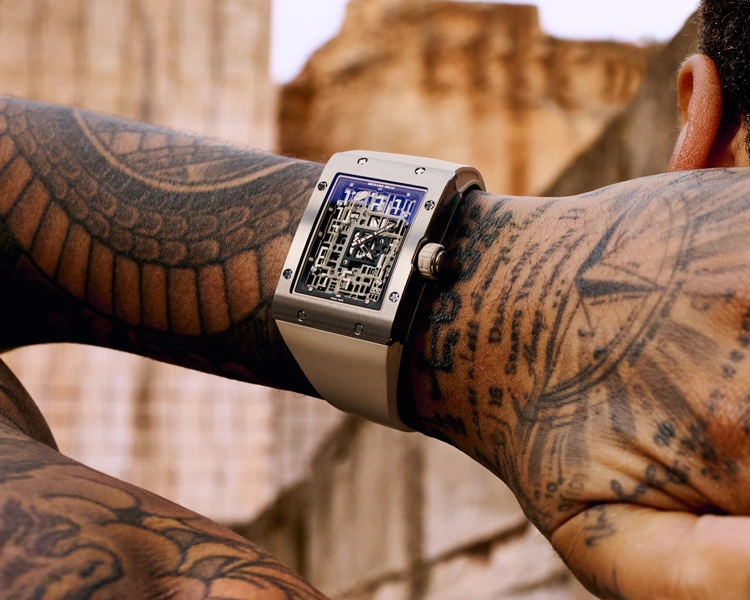
Audemars Piguet Royal Oak Concept Flying Tourbillon, Patek Philippe Ref. 5208P grand complication skeleton, and Richard Mille RM series dominate with ultra-light titanium cases and extreme openwork.
Contemporary & Accessible Segment
Tissot Le Locle Open Heart, Frederique Constant Manufacture Open Heart, and Bulova Automatic Skeleton offer skeleton aesthetics at more attainable prices.
Microbrand & Independent Innovators
Ming, Czapek, and Ressence deliver minimalist openwork with proprietary movements and unconventional layouts.
Advantages and Trade-Offs of Skeleton Design
Aesthetic and Emotional Appeal
The visible mechanics create a mesmerizing, ever-changing dial that rewards close inspection and changes dramatically under different lighting.
Technical and Practical Considerations
Advantages include lighter weight and unique visual identity. Drawbacks involve higher dust sensitivity, more complex servicing, and potentially reduced legibility in low light.
Maintenance and Longevity of Skeleton Watches
Cleaning and Dust Protection
Openworked movements require ultrasonic cleaning and re-lubrication every 3–5 years. Sapphire crystals and sealed casebacks help minimize ingress.
Visibility of Wear and Aging
Exposed finishing highlights quality—and any wear—over time, making regular professional servicing essential.
Conclusion: The Enduring Allure of Skeleton Watches
From Technical Curiosity to Artistic Statement
Skeleton watches elevate mechanical transparency into wearable art, celebrating the beauty of every gear, jewel, and bridge.
Future of Openwork Design
With lightweight alloys, silicon components, and modular architectures, skeleton watches will continue pushing boundaries of weight, thinness, and visual drama—remaining a pinnacle choice for collectors who value both precision and poetry in horology.